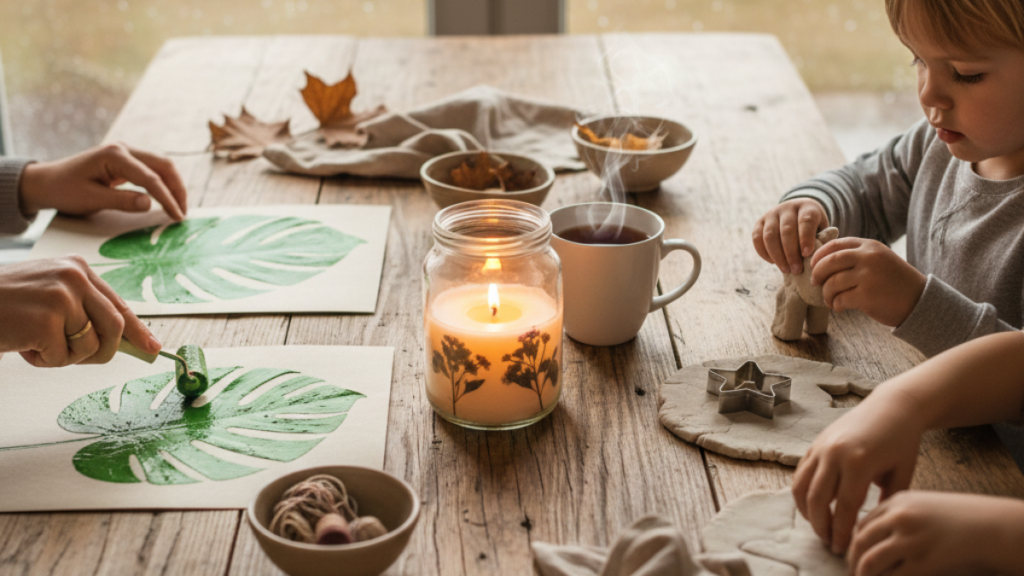
I’m not talking about plans out of the house or endless to-do lists. I’m talking about quiet ideas for staying home on a rainy Sunday, making something with your hands, and slowing down.
Listen to that tapping on the window. Hear it? That’s the official sound of not having to go anywhere today. While the rest of the world complains about bad weather, you and I know today is opening night: for that project that’s been sitting in a drawer for months, for hands covered in paint, for watching the kids concentrate like never before.
A rainy Sunday isn’t a punishment. It’s a golden chance to get back in step with our own home. Today we’re not going to watch the hours pass in front of a screen. We’re going to create, sew, transform, and enjoy every minute among threads, cardboard, and laughter. A home isn’t just four walls. It’s what happens inside when we decide the time belongs to us.
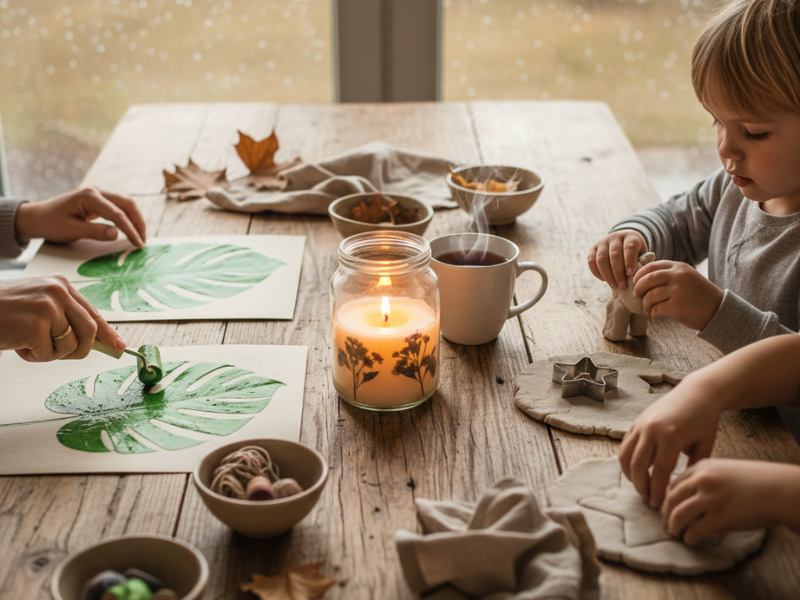
The power of a rainy Sunday to boost your creativity
You know the feeling: the sun comes out and suddenly you think you have to go out, run around, keep up with a thousand outside plans. When the sky closes in, though, the world gives us silent permission to look inward. Rain is the perfect backdrop for crafting because it strips away distractions. The atmosphere turns more intimate, the light is softer (ideal for seeing thread colors without annoying glare), and the house holds you a little differently.
This post isn’t about spending the afternoon staring at the ceiling. It’s about turning your living room into a real craft studio. From the garment that badly needs mending to the game that will fascinate your kids without any wifi involved. Get ready, because today your home becomes the epicenter of creation.
Sewing studio: rescue, repair, reborn
Sewing is possibly the most rewarding activity for a rainy Sunday spent indoors (for me, at least). There’s something deeply healing about the rhythm of a needle, whether it’s the steady clatter of the machine or the unhurried silence of hand embroidery. Here are two projects you can start and finish today.
The scrap pouch: the ultimate textile puzzle
Do you have a bag stuffed with fabric scraps from other projects? Time to pull them out. Don’t look for perfect fabrics, look for pieces that tell a story. Creative patchwork is ideal for today because it doesn’t require buying a single thing.
The process starts by spreading all your scraps across the rug or the dining table. Play with them, set that rustic linen piece next to the vintage floral canvas. They don’t have to be perfect squares. Irregular shapes give a much more artistic, modern feel, right in line with what we’re after in 2026.
Once you have a layout you like, start joining the pieces. If you’re using a machine, remember that your iron is your best friend: press each seam open so the result lies flat and looks professional. If you’d rather have total calm, join them by hand with a blanket stitch or a decorative running stitch in heavy thread. By the end of the afternoon you’ll have a one-of-a-kind pouch for your floss or your makeup, and you’ll have emptied out a bit of that scrap drawer that’s perpetually about to burst.
Embroidery on clothes: your closet gets something new today
You don’t have to buy new clothes to feel like you’re wearing something new. Grab that plain sweatshirt you’re bored of, or the jeans with the small stain that won’t come out. A rainy Sunday is made for rescue embroidery.
Sketch something simple with a soft pencil or a fabric marker: a constellation across the shoulder, an olive branch growing out of the pocket, or even a few words that motivate you. Skip complicated patterns and let your hand flow. Use the stem stitch for long lines and French knots for dimension. The best part of this plan is that tomorrow you’ll head to work or the grocery store in a piece that carries your signature, and every time you look at it you’ll remember what a good time you had while it poured outside.
DIY crafts: useful objects that transform your space
If you feel like putting the needle down for a while, let’s explore projects that use materials you already have at home and will change how your shelves look.
Soy candles: making your own light
Making candles is pure alchemy. If you have leftover stubs of old candles lying around, or soy wax you bought with good intentions that ended up in a drawer, today’s the day. Melting wax in a double boiler is an almost meditative process. While it melts, hunt for original containers: that mug with the chipped rim you no longer drink from, glass canning jars, or even walnut shells for tiny floating candles.
The trick to making them spectacular is adding natural elements. If you have dried flowers or spices like star anise or cinnamon sticks, place them carefully near the wick before the wax cools. When you light them at night, they won’t just illuminate the room, they’ll tell a beautiful visual story. It’s a clean, safe craft that leaves the house smelling incredible without any chemical sprays.

Block printing with what’s in your fridge
Did you know half a potato or a bunch of celery makes an incredible design stamp? If you have acrylic paint and a little white paper or fabric, you have a professional print studio at home!
- Cut a potato in half and carve a simple shape (a triangle, a leaf).
- A bunch of celery, sliced across the base, leaves a print that looks like a perfect rose.
- Use these “natural stamps” to personalize tote bags, napkins, or even to create your own wall art. It’s a very hands-on, fun activity that lets you experiment freely with color.
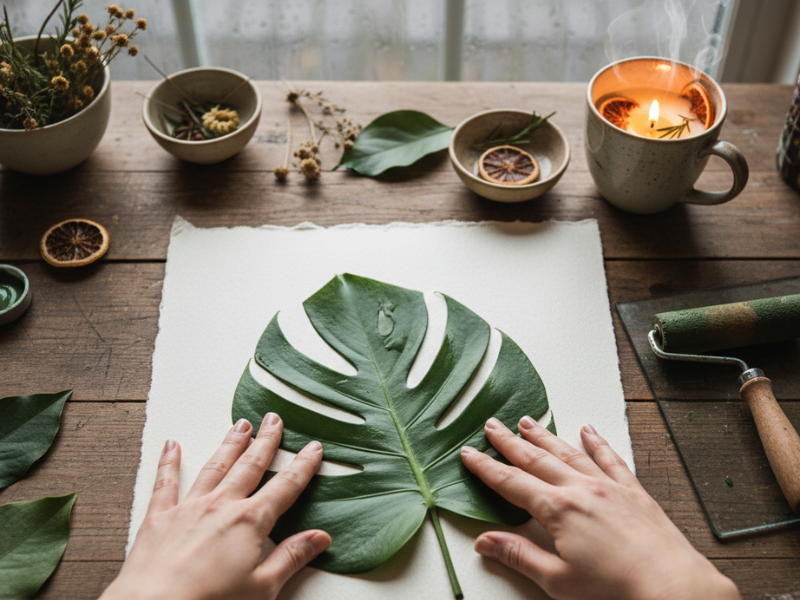
The little artists’ studio: screen-free creativity on a rainy Sunday
When the rain won’t stop, the biggest challenge is keeping the kids from getting swallowed by a tablet or the TV. The trick is offering them something even more stimulating: the ability to make something with their own hands.
Cardboard embroidery: a sewing intro for kids
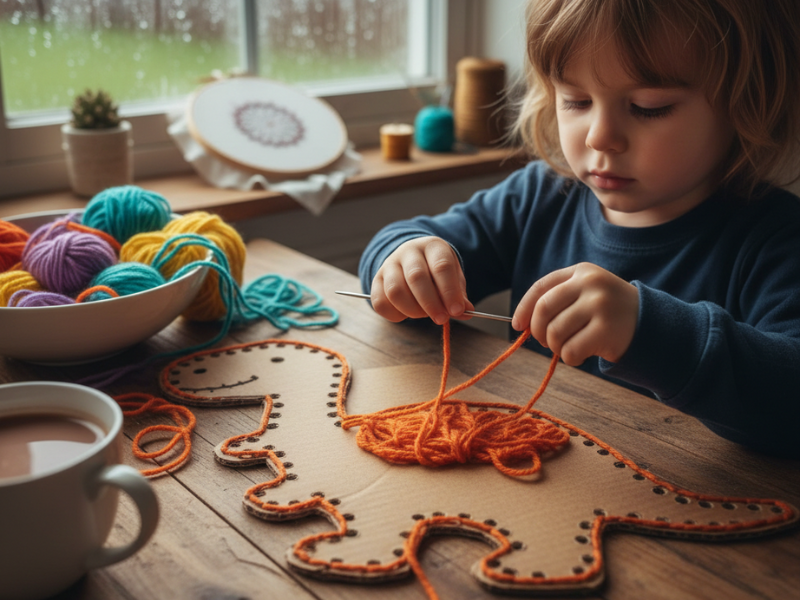
This is one of my favorite plans because it combines my love of thread with their need to learn new things. Don’t hand them fabric, since they’ll get frustrated if the needle doesn’t pass through easily. Instead, grab cereal boxes or shipping cartons you have around the house. Cut out large shapes like a cloud, a sun, or, why not, a dinosaur. With an awl or a thick nail, punch holes along the outline of the shape, about half an inch apart.
Give them colorful yarn from your leftovers and a blunt plastic needle (you can even stiffen the end of the yarn with a bit of tape so it acts as a needle). Show them how to go in one hole and out the next. They get hypnotized watching the yarn “draw” across the cardboard. This activity builds fine motor skills incredibly well and gives them an enormous sense of accomplishment when they finish their first textile picture.
Salt dough: sculptors in the kitchen
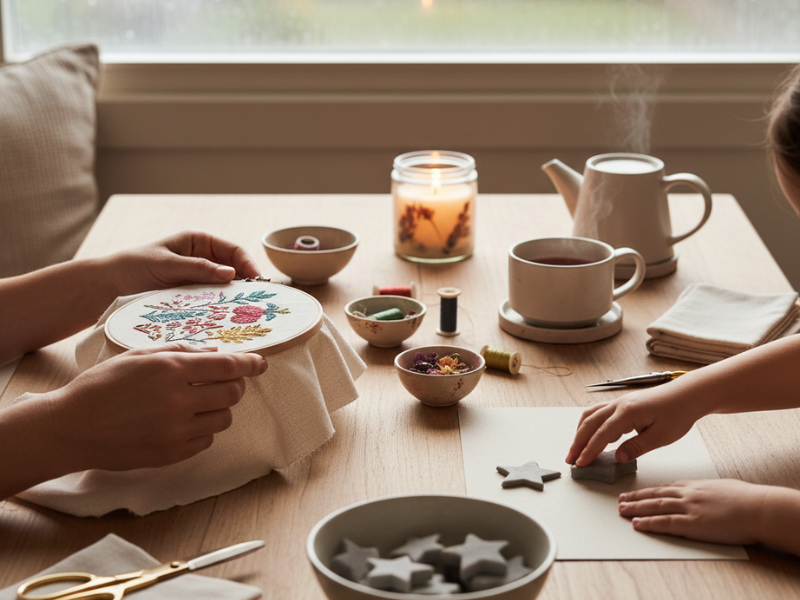
If the kids need something more physical, salt dough is the queen of crafts. It’s cheap, safe, and made from whatever’s in the pantry: one cup of fine salt, two cups of flour, and one cup of water. Mix it all in a bowl and start kneading! The texture is delightful and it lets them make everything from little figures for their games to decorative dishes for holding keys.
The secret to total success is the baking. Once the shapes are made, put them in the oven at a very low temperature, around 200°F, for a couple of hours. That hardens the pieces completely. Once they cool, you can all sit around the table with tempera paint and brushes. Painting on hardened salt dough is deeply satisfying because it soaks up color vibrantly. This project fills a whole afternoon: kneading, sculpting, waiting on the oven, and painting at the end.
Home organizing and rescue: the order that brings peace
A rainy Sunday is also the perfect moment for those household maintenance tasks we always put off, the ones that lift an enormous weight once they’re done. I’m not talking about deep cleaning, but about organizing with care.
The mending basket first aid kit
We all have that basket where things pile up: the shirt that lost a button, the seam that came apart, the skirt that needs hemming. Use the soft light of a rainy Sunday afternoon to empty that basket. Sewing on a button might sound boring, but with soft music playing and none of the morning rush, it turns into an act of care toward your things.
Try contrasting thread colors on those buttons, or add a small decorative stitch over the torn seam. It’s what we now call visible mending. Instead of hiding the damage, we celebrate it. Your clothes gain personality and you get the peace of mind of having closed those small loose ends that nagged at you every time you opened the closet.
Organizing thread and supplies by color
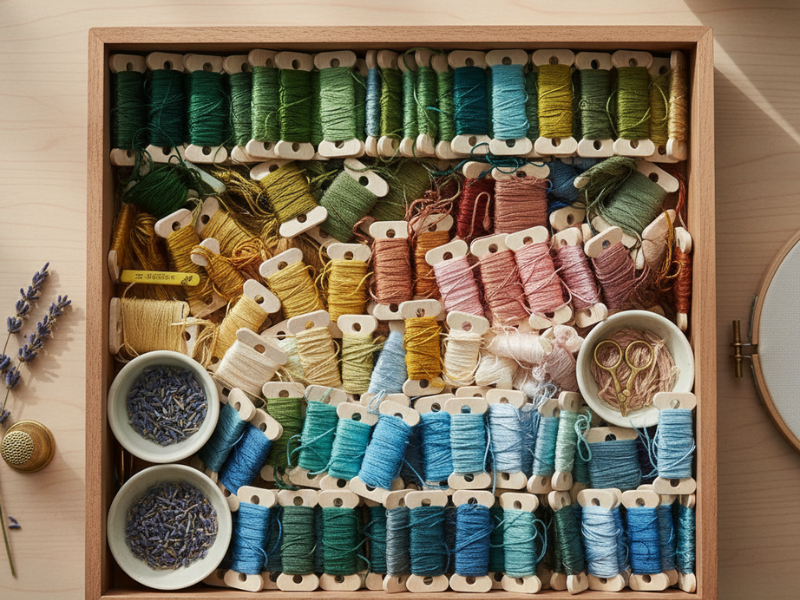
If you’re anything like me, your floss and yarn tend to blur into a riot of color. Give one hour of your rainy Sunday to sorting them. It isn’t only about looks, it’s about creative efficiency. Wind loose threads onto wooden clothespins or little cardboard bobbins. Sort them by color family: blues with greens, earth tones with yellows, and so on.
Seeing your supplies organized is a shot of inspiration. All at once you spot color combinations you’d never considered. The simple act of touching the fibers and arranging the materials is also deeply relaxing. It’s like preparing the ground so that the next time you have a free afternoon (it doesn’t have to be another rainy Sunday, any day you feel like it works), creativity can flow without wrestling a knot of tangled thread.
Small corners, big changes: furniture DIY
We sometimes think refreshing a home requires a full renovation, but a rainy Sunday is the ideal moment for “micro-decorating” projects. The kind you do in one corner that change the energy of an entire room.
Painting knobs and metal details
If you have a dresser or nightstand that bores you, you don’t need to repaint the whole thing. Sometimes just swapping or restoring the knobs makes the piece look brand new. If you have a bit of spray paint, or even nail polish you no longer wear (yes, it works beautifully on small details!), you can give the pulls a fresh coat of color.
A matte gold or a dusty green over old metal knobs can make a basic piece suddenly look like an antique find. The process is quick: unscrew, clean, paint, reattach. The satisfaction of seeing the change by the end of the afternoon is immense.
The art of shelves: visual curation
When was the last time you looked at your shelves through a decorator’s eyes? We usually just pile things up with no plan. Today, since you’re home anyway, empty them completely.
Dust them lovingly and start filling them again, this time with intention. Mix your books with your thread baskets, set out that ceramic piece you made or the embroidery you finally finished. Leave empty gaps so the eye can rest. Creating beautiful still lifes on your own shelves is an art form that improves the feel of your home enormously without spending a dime.
The question corner: FAQs about keeping busy at home on a rainy Sunday
It’s normal for questions to come up when we plan a day like this, especially if we’re not used to slowing down.
How do I keep the house from looking like a war zone after crafting?
The trick is defining the space. Use a wipeable tablecloth or large sheets of newspaper on the table. Keep a small bin handy for thread ends and paper scraps, and most importantly, make cleanup part of the game with the kids. “Whoever fills their treasure box first picks the movie afterward.”
What do I do if I’m missing a supply from the list?
Improvise! That’s the essence of rainy Sunday crafting. If you don’t have paint, try very strong instant coffee or beet juice to tint paper. If you don’t have fabric, use an old sheet you no longer need. Creativity is born of scarcity, not of having everything.
How do I handle frustration when a project doesn’t turn out as expected?
Remember that today the goal is the process, not a magazine-worthy result. If your embroidery comes out crooked, call it “rustic style.” If the salt dough cracks, say it’s “vintage art.” We’re here to enjoy a rainy Sunday, not to pass a crafting exam.
Which basic supplies should I always keep at home for a day like this?
Ideally you’d have a “creative emergency kit”: a box with fabric scraps, basic thread (white, black, beige, and a couple of bright colors), strong glue, flour and salt for dough, and some kind of paint. With that and a little imagination, you can face any storm without getting bored.
My kids get bored with crafts quickly. What should I do?
Don’t force the length. Three twenty-minute activities beat one that runs an hour. Alternate something physical (like shadow puppets) with something that requires focus (like cardboard embroidery). Remember: what matters most is that they see you enjoying yourself, because that’s what motivates them to keep going.
Is embroidering in low light on rainy days bad for my eyes?
Be really careful with this one! The light on gray days is beautiful but deceptive. Try to always sit near a window. If the afternoon starts to fade, use a warm lamp aimed directly at your hands, and never strain your eyes. Your vision comes first if you want to keep stitching for many more years.
What if I don’t consider myself a creative person?
Creativity isn’t a gift you’re born with, it’s a muscle you train. Nobody is born knowing how to work a perfect stem stitch or sculpt salt dough. Start with something that doesn’t scare you, like sorting your thread into color families. That’s already making aesthetic decisions. You’ll find that once your eyes get used to combining colors, your hand gets curious about the needle. A rainy Sunday is the perfect day to “fail” because nobody is watching.
I don’t have a sewing machine. Can I still make the scrap pouch?
Of course! Hand stitching is completely on trend right now. Joining scraps by hand with a small running stitch gives a handmade, rustic feel that a sewing machine can never imitate. It takes longer, yes, but remember that the whole point of a rainy Sunday is letting time move slowly. Enjoy the feeling of joining each piece of fabric with your own hands.
I tried making salt dough and it came out sticky. What happened?
That’s the most common issue and it usually comes down to humidity in the air (those rainy days!). If the dough sticks to your fingers, add flour a little at a time until it feels like modeling clay. If it cracks instead, it needs a touch more water. Salt dough is very forgiving and allows constant corrections until you hit the perfect texture.
Can I wash the garments I embroidered today with colored thread?
If you used quality embroidery floss (six-strand cotton, for example), it’s usually wash resistant. My advice, though, is to wash that embroidered sweatshirt or shirt by hand in cold water the first time. That way you make sure the thread doesn’t bleed dye onto the fabric. Since it’s handwork, it’s also better to avoid the rough tumble of the washing machine so the stitches don’t suffer.
What do I do if I run out of the color I need halfway through a project?
That’s the perfect opportunity for creativity! Don’t get frustrated about not being able to run to the craft store. Change the color, create a gradient effect, or use a completely opposite tone for a modern twist. In the craft world, “mistakes” or missing supplies tend to produce the most original pieces with the most personality.
Can I use regular paint for botanical printing on fabric?
If you want the design to survive washing, you need paint made for fabric. If you’re only experimenting on watercolor paper or cardstock, though, any acrylic paint the kids have around the house will do. What matters is that the paint isn’t too runny, so it doesn’t bleed past the edges and the image stays crisp.
The rainy Sunday closing ritual
We don’t want Sunday ending with that anxious feeling about Monday coming. We want the transition to be smooth, like the stitch that finishes a piece of embroidery. That’s why the last part of the afternoon is for gathering up not only the house, but the mind as well.
The satisfaction of creative order
After a whole afternoon of making things, the table is probably a chaos of thread, trimmings, and bits of dough. Don’t see it as a burden. Give the last thirty minutes of daylight to putting everything back in its place. Winding leftover yarn, washing brushes, and folding fabric is a ritual of gratitude toward your tools. Seeing the table clean and clear, with your finished projects resting on it, gives you a sense of creative duty fulfilled that helps you sleep much better.
The Monday outfit corner
Since we’ve been upcycling and mending clothes, take a minute to lay out tomorrow’s outfit. Hanging up that shirt you just embroidered or the scarf you personalized gives you extra motivation to get up. It’s a way of carrying a small piece of your creative Sunday into the stress of the work week. Your home is calm, your projects are safe, and you’re ready for whatever comes.
Tell me about your rainy Sunday
I’d love to hear how your day went. Did you go for the scrap pouch? Did you discover your kids are salt dough artists? My favorite part of writing this blog is reading about your experiences and learning the tricks you use in your own homes.
Leave a comment below and tell me: which project saved your afternoon? Is there a craft you’d like me to explain in more depth in the next post? I read every one with a smile and a real desire to keep creating together.
Until the next stitch, and may the rain always find you creating!