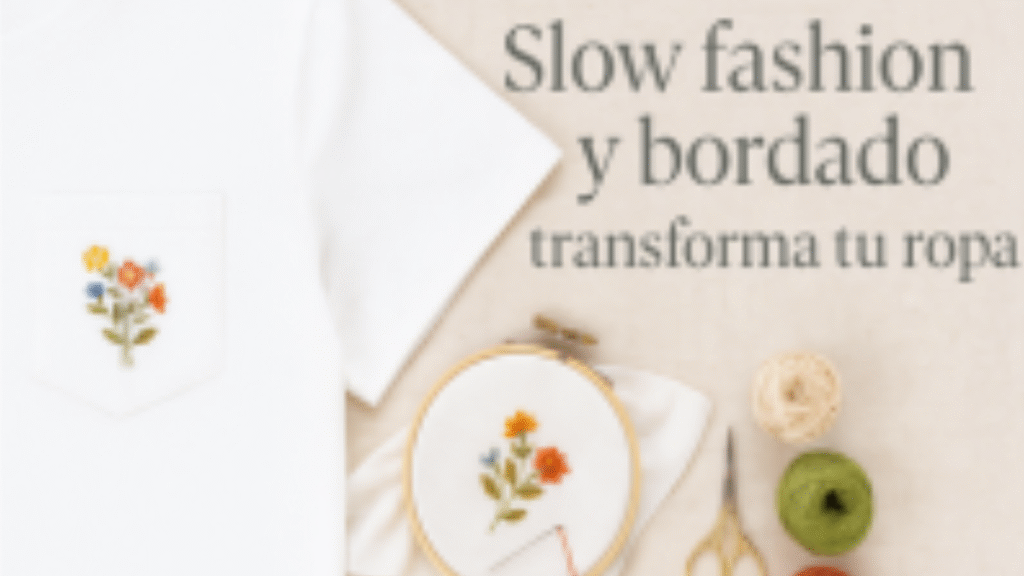
One of the best ways to refresh your closet is with embroidered details, so you save money on clothes and get to practice your hobby at the same time ^^. Learn what slow fashion is and how to personalize, save, and reuse with this practical, creative guide.
A while back I realized my closet was full of clothes and I still ended up wearing the same few things. Does that happen to you too? We buy and buy and pile it all up, and somehow we still feel like we have nothing to wear. Poking around online, I came across a concept I’d never heard of: slow fashion. Apparently it’s the opposite of fast fashion (that one I did know about), and the whole idea is focusing on clothes built to last.
The catch I see with this concept, at least it’s new to me, is that the pieces are more expensive, which makes sense, since clothes only last if they’re made from quality materials. They’re also a bit more “boring.” I say boring because they tend to be closet basics meant to carry you through several seasons, which puts them pretty far from the trends that turn over every year.
So, since I can’t afford to rebuild my whole closet with expensive pieces no matter how well made they are, and since I do like wearing things that stray from the basics now and then, I decided to give new life to the clothes I hardly ever wear using embroidery, trims, and so on, instead of tossing them and buying new. This new hobby is turning out to be a real pleasure.
I’d love to have a genuine slow fashion closet someday, truly, but that’s something I’ll have to build little by little. In the meantime, I can keep extending the life of what I already own.
Once you decide to transform your clothes, the ideas start coming. A basic tee becomes one of a kind with a few flowers on the shoulder. Worn-out jeans get a second act with some stitching on the pocket. You don’t have to overhaul a garment completely, since one small detail here and there is enough to make it look like something else entirely.
A Bit of History: From Traditional Sewing to Slow Fashion
When you think about it, slow fashion isn’t new at all. Just a few decades ago our grandmothers were already living this way. They sewed their own clothes, mended the tears, used up the scraps, and personalized garments to give them a longer life. Fast fashion arrived much later, with industrialization and the mass production of cheap clothing.
The trouble is that this newer model of consumption brought some serious consequences with it: labor exploitation, tons of textile waste from clothes discarded every year, and an enormous environmental footprint. Against all that, slow fashion invites us back to the essentials, back to the idea that clothing has value and that we can’t keep buying and throwing away this much every single year.
To my mind, embroidery has always been tied to patience and craftsmanship, which makes it a perfect fit for this philosophy. Stitching your own clothes is a gesture that steps away from the rush and leans into calm. In a way, it’s a bridge between the old and the modern.
Embroidering a garment isn’t only about decorating it. You’re giving it your time, your care, and your creativity. That’s how you end up liking your clothes again, and wearing them with a little pride in your own work.
Chances are you have pieces you barely touch because they strike you as dull or too plain, exactly like I do. A stitched detail can rescue them and give you that feeling of wearing something new, without buying a thing.
The lovely part about embroidery is that every piece becomes unique. Nobody else will own a garment quite like yours, and it’s more sustainable too, because you’re making the most of what you already have. It also works as therapy: stitching relaxes you, helps you focus, and takes the edge off stress (that’s how it goes for me, anyway). On top of all that, it’s cheap. A few threads and a needle are all you need to work real magic.
Fast Fashion vs. Slow Fashion with Embroidery
| Aspect | Fast Fashion | Slow Fashion with Embroidery |
|---|---|---|
| Production | Mass-produced, rushed, impersonal | Handmade, mindful, personal |
| Durability | Low, garments that don’t last | High, clothes cared for and renewed |
| Originality | Thousands of identical copies | Every piece is one of a kind |
| Environmental impact | Very high | Far lower |
| Emotional connection | Distant, easy to throw out | Close, the garment tells your story |
Ideas for Embroidering and Personalizing Your Clothes
Here are a few simple, creative ideas you can put to work refreshing your closet. See what you think:
Stitch flowers on a basic tee
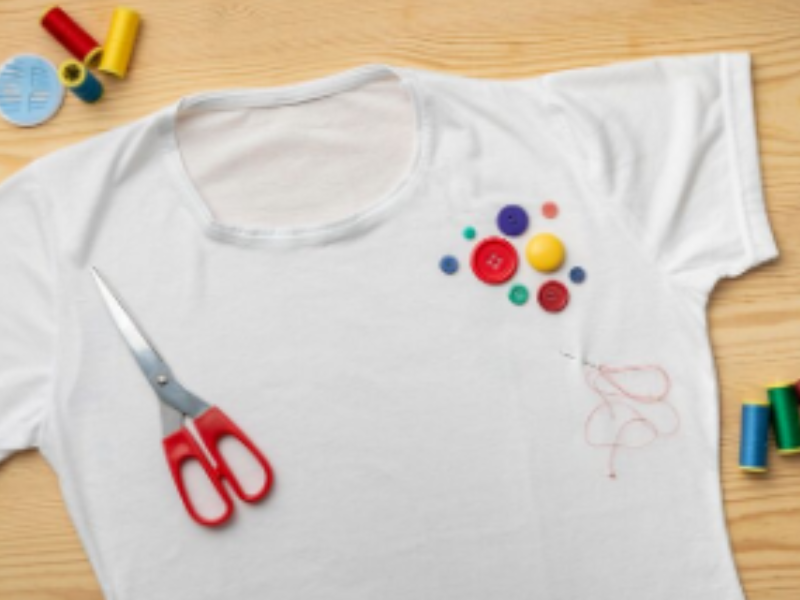
This is probably the first idea that occurs to all of us. A few daisies on the shoulder, or a small sprig of flowers by a pocket, is enough to breathe new life into a plain t-shirt. It isn’t much work, and I think the result can be adorable.
Give your jeans a refresh
Add embroidery to the back pockets, the knees, or the hems. Embroidered jeans have a bohemian feel that never really goes out of style, though this one works better if you own a sewing machine. Without one, it’s a bit more labor-intensive.
Restyle your jackets
On the back of a denim or linen jacket, you can stitch a large design and turn it into the boldest piece you own. If that isn’t your style, swap out the buttons instead, or add a small motif at the cuffs.
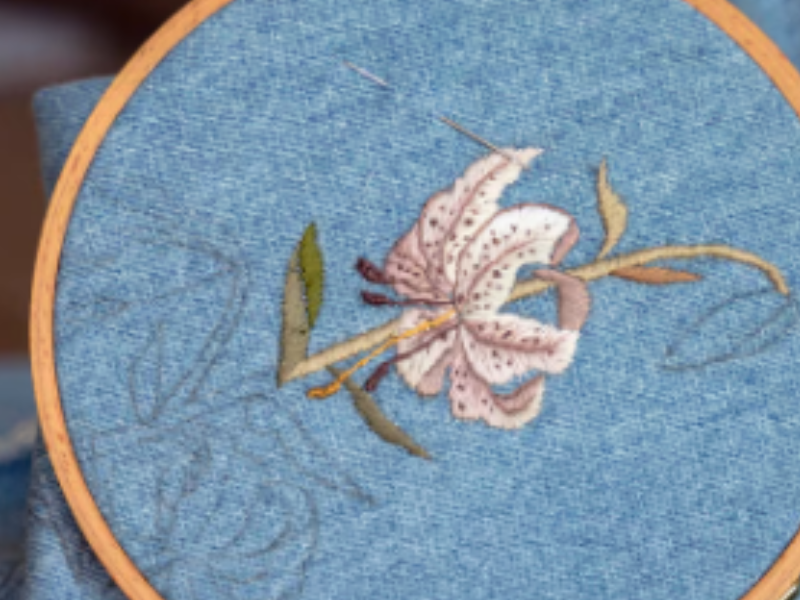
Bags and backpacks
A small motif on a bag flap or a backpack pocket turns any ordinary accessory into something special. If you’re nervous about starting on your clothes in case you ruin them, begin with an old bag or backpack instead. Once you see how it turns out, I’m betting you’ll want to start on your t-shirts ^^
Subtle touches
If big designs aren’t your thing, try stitching just a monogram, or tiny hearts and stars, somewhere discreet like the cuffs or the edge of a pocket.
Visible mending
If a garment has a hole or a stain, cover it with a creative bit of stitching. What used to be a flaw becomes an artistic detail.
Getting Started: The Basic Supplies
You don’t need much to start embroidering your clothes. If you already stitch at home as a hobby, you probably don’t need to buy anything at all. Embroidery needles, stranded cotton floss or perle cotton, a hoop to keep the fabric taut, small scissors, and a pencil or water-soluble transfer paper for the design will cover it. The only thing left is deciding which garment to start with and what to do to it, and that part is entirely up to you.
Practice Exercises for Beginners
If you’ve never embroidered on clothing before, here’s the simple plan I used myself:
- Pick an old cotton t-shirt, or any other garment you’d like to refresh.
- Draw a small, simple shape, like a star or a flower. I did a little daisy on the sleeve.
- Use backstitch to outline it.
- If you’re feeling ambitious, fill it in with satin stitch, or leave it unfilled. Your call.
- Hand wash the garment and you’ll see how well the stitching holds up, and how different your t-shirt looks ^^
As you work through more pieces and build confidence, move on to jeans, bags, or jackets. Right now I’m deep into refreshing my old button-downs: a detail on the collar here, a symmetrical motif on the cuffs there. So far I’m pretty happy with how they’re coming out.
Practical Tips for Embroidering Your Clothes
In my experience it’s always best to start with cotton garments, since they’re easier to work with than stretchy knits.
Use good-quality thread so the embroidery survives washing and you can wear the piece for a long time, which is the whole point. If the fabric is very thin, back the embroidery with interfacing.
Most important of all, hand wash your embroidered pieces to keep them in good shape.
How to Care for Your Embroidered Clothes
If you want your embroidered pieces to last for years, treat them gently. Wash them in cold water with a mild soap, skip the washer and dryer, and always air dry them flat. When you press them, work from the wrong side with a cloth over the top to protect the threads. If all of that sounds like too much, you can always take them to a dry cleaner. It isn’t that expensive, and I think it’s worth it to preserve our little works of art.
Frequently Asked Questions
What if I make a mistake
Nothing happens, don’t worry about it. We all make mistakes. Just pick out the stitch carefully and start again. At the end of the day we’re refreshing clothes we were going to get rid of anyway.
What if the garment is stretchy
You can still embroider it, though backing the fabric with interfacing is recommended so it doesn’t distort. A sewing machine can be a real ally in these cases.
Can embroidered clothes go in the washing machine
Hand washing is best. If you do use the machine, put the garment in a mesh laundry bag, the kind sold for delicates, and select a gentle cycle.
Which threads are best
Stranded cotton floss is very versatile, but fine wool or metallic threads work too if you’re after a particular effect. In the end, the best material is whichever one gives you the result you’re looking for.
How long does it take to embroider a garment
It depends on the design. A small motif can be done in an afternoon, while a large one might take several days. As long as you enjoy the process and the result, I think the time it takes matters least of all.
My Experience with Slow Fashion and Embroidery
As I mentioned at the start, I stumbled onto this whole approach by chance, and when I began embroidering my clothes it was pure curiosity. What I didn’t expect was how much it would change the way I shop for fashion.
I no longer feel that pull to buy something every time I see a piece I like, because I know a needle and thread can turn anything already hanging in my closet into something even better.
Each piece of embroidery also becomes a memory. A flowered t-shirt I made one summer, a pair of embroidered jeans I finished on vacation, even a few pieces I stitched as gifts that went over really well (or so I’ve been told). No store can give you that.
I don’t think slow fashion is a passing trend. It’s a way of engaging with clothing that’s mindful, sustainable, and creative, much like people did many years ago. Embroidery strikes me as a great ally for putting it into practice.
With every stitch you’re doing more than decorating a garment. You’re giving it value, making it yours, and cutting down on needless consumption. Embroidering your clothes turns out to be far more than a creative gesture. It’s an act of love toward yourself, toward your closet, and toward the planet.
Now I’d love to hear what you think. Are you up for trying slow fashion through embroidery? Which piece would you rescue from your closet and transform? Leave it in the comments, I’d love to hear from you and swap ideas. If this guide inspired you, share it so more people discover the power of stitching instead of buying more ^^