Hello! Since I’m passionate about embroidery, today I want to take you on a very special journey. This isn’t only history, and it isn’t only art. It’s an emotional, sensory, deeply human tour through the stories that have been stitched in silence. Because thread, when you hold it with intention, can say what we often can’t put into words.
So come along with me for this post, where we’ll talk about embroidery as a secret language, with real examples, stories, and plenty of inspiration to help you look at your needle with new eyes.
Find out how embroidery has been used as a secret language throughout history, from captive queens to modern activists. An emotional journey through thread, power, and hope.
We start in the 11th century with a textile treasure: the Bayeux Tapestry, a monumental 230-foot piece telling the story of the Norman conquest of England in 1066. Picture a giant hand-stitched comic strip, full of characters, battles, symbolic gestures, and politics. (Its name says tapestry, but technically it’s embroidery, worked in wool on linen.)
What fascinates me most is that it was probably stitched by women. They couldn’t speak in public, but they could stitch what the world needed to remember. It was their way of leaving a mark!
Small details, like soldiers kicking dogs or odd gestures, may be veiled criticism of the men at the center of the story. Subtle, but powerful.
Imprisoned Queens Who Stitched Their Own Story
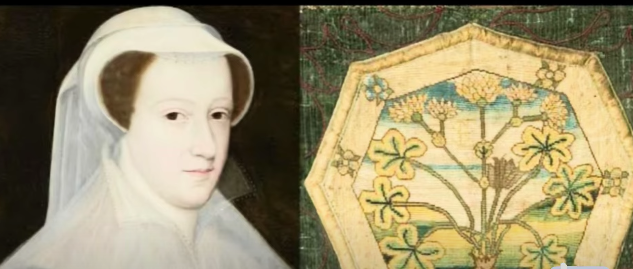
One of the most moving stories is that of Mary, Queen of Scots, who spent nearly twenty years imprisoned in England and stitched constantly during that time.
Among the threads and fabrics she left coded messages: a catapult attacking a castle, an open cage, symbolic animals like cats, snakes, and lambs. Every stitch was a gesture of resistance, a way of staying sane and present.
It was writing without a pen. It moves me to think that even locked away, stitching was how she spoke.
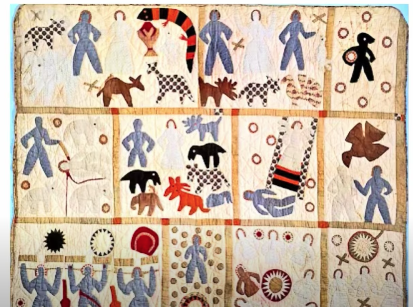
African American Quilts: Shelter and Secret Code
Moving on to the 19th century. In the United States, enslaved women couldn’t read or write, but they could sew. And sew they did, with soul and with intention.
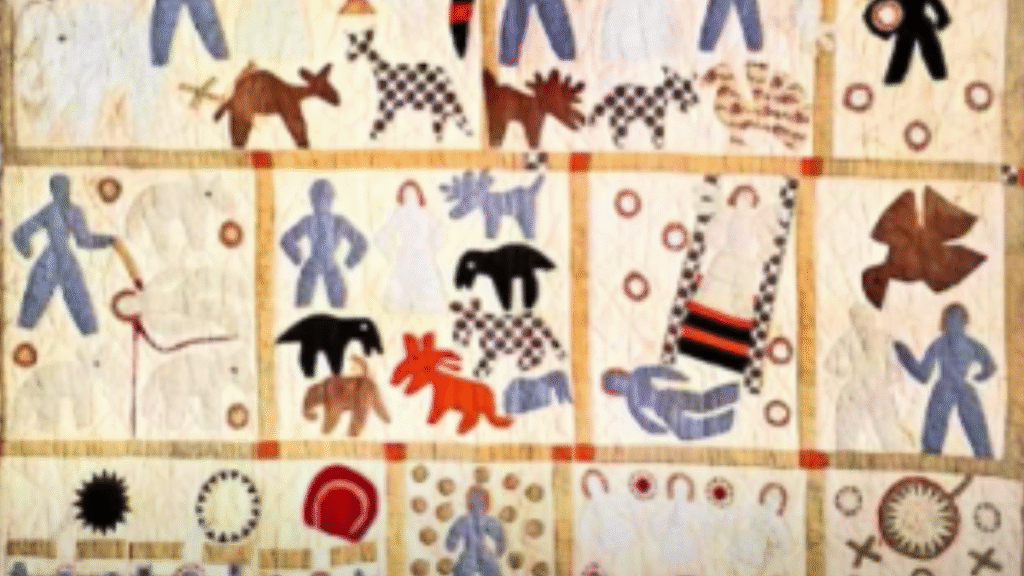
Quilts didn’t only provide warmth. According to a well-known story, some may also have served as signals along the Underground Railroad. Patterns like Log Cabin (with a red center said to symbolize shelter) or Flying Geese (said to point the way north) might have worked as secret maps.
It’s worth saying that most historians consider the quilt code more legend than documented fact, since it comes from oral accounts recorded much later. What isn’t in doubt is this: thread was resistance, it was care, it was love in dark times.
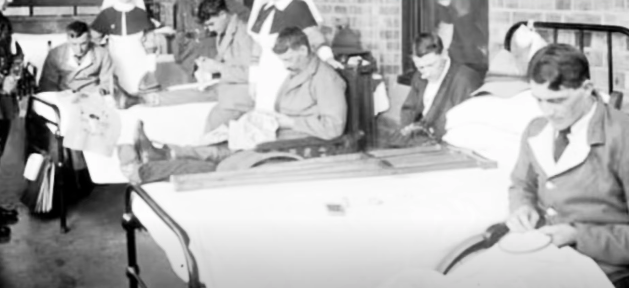
Stitching to Heal in Wartime
During both World Wars, embroidery was an emotional lifeline:
- Wounded soldiers stitched to quiet their minds.
- Women sent messages of love on napkins and tablecloths.
- In the concentration camps, some prisoners stitched in secret.
At Ravensbrück, for example, women stitched pieces they hid in their clothing, some of them carrying words meant to keep hope alive. One of them read, “I survive as long as I can create.” That line goes straight through me, and I think I’ve felt it more than once myself. I believe deeply in the power of small things. A single stitch can be an act of hope.
Embroidery Today: Activism, Art, and a Voice of Your Own
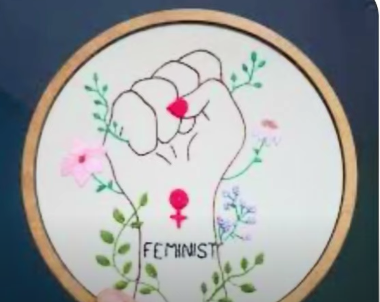
Embroidery has come back strong. It doesn’t just decorate anymore, it also protests, calls things out, and moves people.
Craftivism was born, a blend of “craft” and “activism.” You’ll see stitched banners with lines like:
- “I’m stitching because I’ve done enough shouting”
- “Don’t mess with my thread”
- “This is political too”
Artists like Sarah Corbett, who founded the Craftivist Collective, or Jenny Hart, who brought contemporary embroidery to a whole new audience, are using thread as a tool for change.
My Stitched Story (and Yours)
Now let me tell you something more personal.
My first piece of embroidery was a technical disaster, but an emotional relief. I was going through a hard time, and stitching became my refuge. With each stitch, my mind settled. My thoughts fell into order. My body breathed.
Does that happen to you too? Because stitching isn’t only about “making something pretty.” It’s about listening to yourself, finding a rhythm, reminding yourself that you’re still here, creating, feeling, expressing.
May Your Needle Keep Talking
Today we’ve covered centuries of history spun into thread. From medieval hangings to clandestine stitching in wartime. If one thing is clear, it’s this: thread is a voice too.
Stitch if you can’t shout. Stitch if you want to heal. Stitch if you want to remember. Because every stitch can be a declaration of love, of freedom, or of hope.
If you enjoyed this story, I’d love for you to share it with someone who loves creating with their hands and their heart. Have you ever stitched something with a hidden or special message? Tell me in the comments!
See you soon. In the meantime, may your needle keep talking. ✨
If you’d rather, you can watch it as a video:
Learn more about the history of embroidery.
If this article helped you and you’d like to say thanks, you can buy me a virtual coffee here.