Small living room? Discover the definitive secrets for decorating a small living room with style. A complete guide with visual tricks, smart furniture, and tips for gaining real openness.
If you’re reading this, you’ve probably felt frustrated at some point trying to fit the sofa you love into a living room that seems to shrink every time you look at it. I understand completely. I’ve spent entire afternoons with a tape measure in hand, sighing because I was four inches short of keeping the coffee table from becoming a hurdle in an obstacle course.
Here’s the thing, though. I’ve learned that a small living room has something large ones never will: a built-in ability to be the coziest, most enveloping spot on earth. The key isn’t owning less, it’s owning the right things and knowing where to put them. In this post we’re going to break down every inch of your space so that, by the time you finish reading, your living room feels like it grew by magic.
The smart space mindset: less is so much more
The first thing we have to do is shift our thinking. Stop focusing on what “doesn’t fit.” Think about how you want to live in that space. When you’re working with limited square footage, every object that comes into the house has to earn its spot. I call it decorating with intention.
If something isn’t beautiful, isn’t useful, or doesn’t make you feel good, it simply has no place in a small living room. Energy needs to circulate here, and if the space is saturated with clutter, your mind gets saturated too. Have you ever walked into a room and felt overwhelmed without knowing why? It’s probably because there’s too much visual noise.
The concept of visual lightness
This is the term you’ll read most here. Visual lightness is the art of making things look like they weigh less than they do. A sofa with tall legs, for example, lets you see the floor underneath so your eye perceives more open surface. That’s pure gold when you’re decorating a small living room.
Throughout this guide, we’ll look at how to trick the eye into believing the walls are farther away and the ceiling is higher. Decorating really is part optical illusion, and today you’re going to learn to be the best magician in your own home.
The sofa: the king of the room that shouldn’t eat the space
The sofa is without question the most important piece and the one that takes up the most room. Here’s the first mistake we tend to make: buying a sofa that’s too big because “then everyone fits.” If the sofa blocks the walkway or covers the light, though, the whole living room experience turns into a disaster.
Size does matter: proportion above all
Before you head to the store, measure your living room three times. When you think you’ve got it, measure again. One trick that saved my life was outlining the sofa’s footprint on the floor with painter’s tape. That way you can walk around the room and see whether it really gets in your way when you head for the window or the TV console.
In small living rooms, I usually recommend a generous loveseat or, if you truly need more seating, a sofa with a chaise that isn’t too bulky. If you can, choose one with straight lines and slim arms. Those wide, overstuffed arms can steal up to a foot of usable seating. What a waste!
Sofas with legs: the master trick of elevation
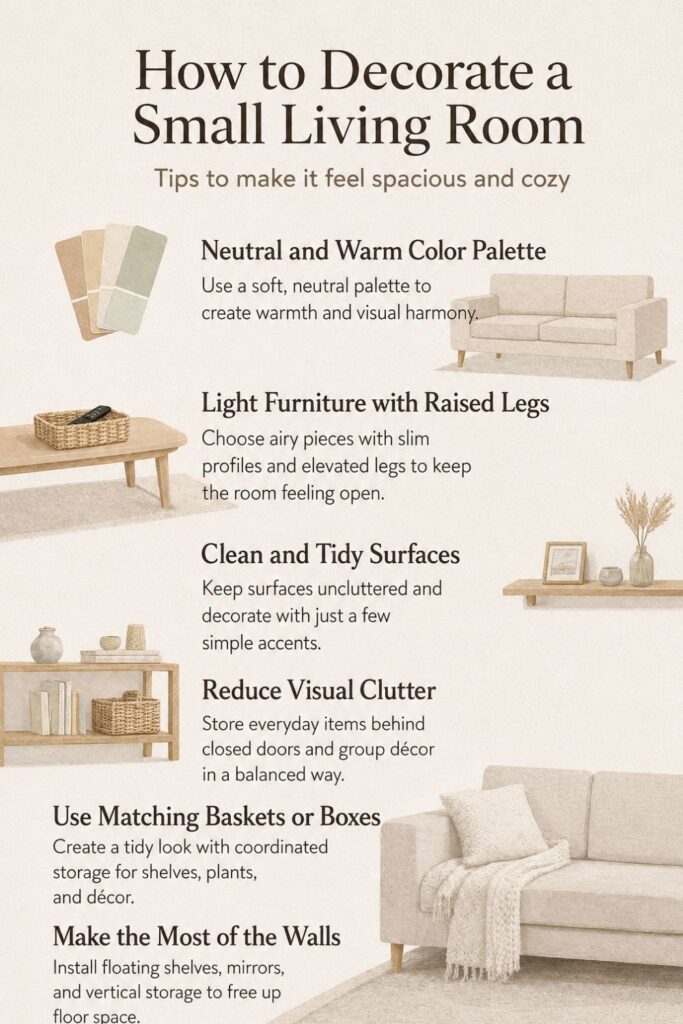
As I mentioned, sofas that sit flush on the floor create a heavy visual block. Choose a model with wood or metal legs that lift it a few inches instead, and light passes underneath. That small strip of visible floor tells your brain the room is more spacious than it looks. It’s a subtle change, but I promise the effect is immediate.
The magic of mirrors: windows to another world
If there’s one element a small living room can’t do without, it’s a good mirror. It isn’t just for checking yourself before you head out. It’s a tool of interior architecture.
Where should you hang a mirror to gain openness?
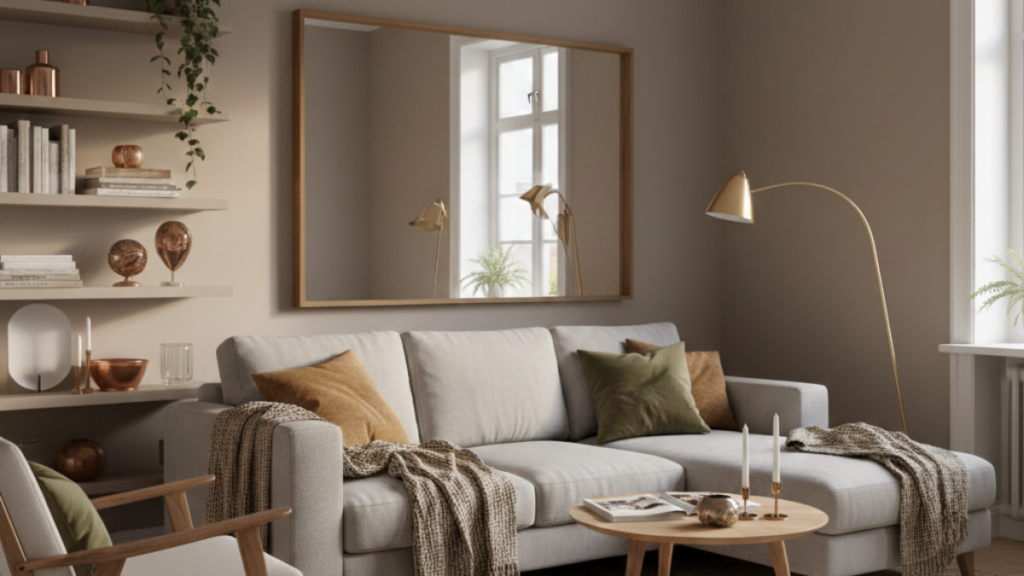
The best kept secret is placing the mirror across from your source of natural light. If you have a window, put the mirror on the opposite wall or beside it. That makes the light bounce and multiply, eliminating the dark corners that make a living room feel like a cave.
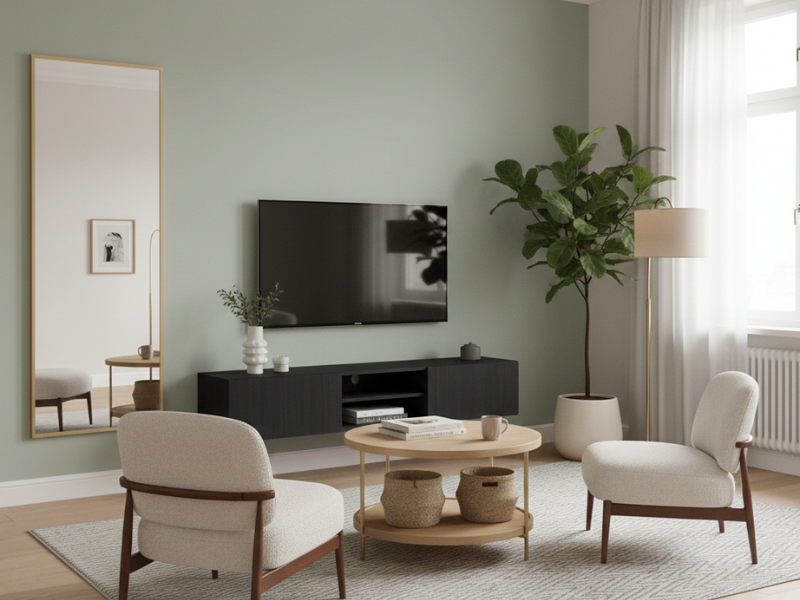
A large mirror also creates a sense of depth. It’s as though you opened a window into a room that doesn’t exist, yet your eye accepts it as real. I have a full-length mirror leaning against the back wall, and honestly, it looks like the living room continues another ten feet beyond.
Wall-mounted mirrors vs. leaning mirrors
If you want a more modern, relaxed look, leaning a large mirror against the wall (well secured, of course) gives a very bohemian, easygoing feel. If you prefer something more classic, an arrangement of smaller mirrors can work like a piece of art, though be careful not to create too much visual chaos. In small spaces, one large, simple piece usually beats many small, busy ones.
Coffee tables: friend or foe of the walkway?
The coffee table is the piece that always seems to be in the way when space is tight. Who wants to give up somewhere to set their coffee or the book they’re reading, though? Not me, that’s for sure.
The power of transparency
For a long time my living room had a beautiful solid wood table, but the room felt jammed up. The moment I swapped it for a glass table (or acrylic, which is lighter and safer with kids or pets), the room opened right up. Because it’s transparent, your eye doesn’t stop at it and instead sees the floor straight through the piece. It’s the ultimate visual lightness trick.
Nesting tables: versatility to the rescue
If you host often but need room to move the rest of the time, nesting tables are your salvation. They’re the ones that tuck one under another. On your own, they take up the footprint of one table, and when friends come over you spread them out and, boom, extra surface. They also tend to have slim designs that never clutter the room.
Smart storage: the art of using your walls
When you run out of floor, it’s time to look up. In a small living room, your walls are your most valuable asset, though you have to use them wisely so the ceiling doesn’t feel like it’s caving in.
Open shelving vs. closed cabinets
This is an eternal debate. Open shelving adds depth and lets you display objects that tell your story, but fill it with disorganized stuff and the visual noise will kill your peace. Closed cabinets, on the other hand, hide the chaos while reading as heavy blocks.
My favorite solution? A combination. Use low, closed cabinets for the things that aren’t pretty (cables, board games, paperwork), and light shelving above for books and plants. Paint the shelves the same color as the wall and your objects will look like they’re floating. It’s a masterful way to gain storage without losing a sense of space.
The TV console: floating is better
If you’re adding a low console for the TV, try to make it a floating one. Leaving the floor clear underneath produces the same effect as sofa legs: your eye perceives more floor surface and the room looks bigger. Vacuuming gets a whole lot easier too!
Textiles that expand: curtains, rugs, and pillows
A lot of people think a small living room calls for thin, small fabrics. Wrong. Textiles are the perfect tool for stretching your room’s dimensions.
Curtains: ceiling to floor, no exceptions
This is one of the highest-impact tricks and almost nobody gets it right. Mount the curtain rod right above the window and you’re visually shortening the wall. Place the rod as close to the ceiling as possible and let the fabric fall until it grazes the floor, and you create an endless vertical line that makes your ceilings look far higher.
One small secret: try to pick curtains in a color very close to your wall color. That way you don’t break the visual continuity and the space flows without interruptions.
The rug: the bigger, the better
Sounds contradictory, doesn’t it? I promise it works. A tiny rug that only sits under the coffee table creates a “patch” that fragments the floor. A large rug that at least the front legs of the sofa and chairs rest on unifies the whole seating area. A big rug gives a sense of generosity and luxury that tricks the brain in the best way.
Lighting: layers of light to create depth
A poorly lit living room will always look smaller and sadder. The classic single overhead light that floods everything flatly is the worst thing you can do for a small space.
Goodbye to the single light source
For a small living room to feel cozy and spacious, you need layers.
- Ambient light: a floor lamp in a corner that washes the ceiling.
- Task light: a small desk lamp or reading lamp near where you read.
- Accent light: an LED strip behind the TV console or inside a cabinet.
Creating different points of light creates zones of light and shadow. That generates volume and keeps the living room from feeling like a flat box. It’s pure nighttime magic!
Plants: the touch of life that takes up no room
Don’t tell me you have no space for plants. There’s always a corner. Plants don’t just clean the air and make you feel better, they add an organic texture that breaks up the straight lines of your furniture.
If you have no floor space, use hanging planters or put trailing plants on top of a bookshelf (pothos or spider plant, for instance). Green adds a layer of visual depth that makes walls feel alive and, therefore, less oppressive.
Color in tight spaces: much more than “paint it all white”
You’ve surely heard it a thousand times: “If your living room is small, paint it white.” Look, white is wonderful, I won’t lie to you, but without care you can end up living in a cold box that feels like a dentist’s waiting room. What we’re after here is warmth, right?
The warm monochrome technique
If you want your living room to feel endless, avoid big color contrasts between the walls, the floor, and the large furniture. I’m a huge fan of sand tones, creams, and the famous greige. When you use a monochromatic palette (everything in similar ranges), your eye finds no visual obstacles. The space flows and suddenly those 100 square feet feel like 150.
Accent walls: yes or no?
Plenty of people are afraid to use dark colors in small living rooms. Here’s something that might upend everything you thought: painting the back wall (usually where the sofa or TV goes) a deep color like midnight blue or forest green can create an incredible sense of depth. It’s as if the wall moves away from you. The trick is keeping the other walls very light to compensate. Dare to try it?
Accent furniture: the quiet heroes
In a small living room, every chair or stool has to be a textbook multitasker. There’s no room here for furniture that does only one thing.
Armchairs with soul (and little bulk)
If you need more seating but another sofa won’t fit, look for Scandinavian-style armchairs. I mean the ones with slim wooden arms rather than fully upholstered sides. Since you can see through them, they don’t block your view of the room and they do their job beautifully. At home I have a couple of natural fiber stools that work as a side table when I’m alone and as seating when someone comes for dinner. Pure efficiency!
The ottoman: your best ally
Never underestimate the power of a good ottoman. It takes up almost nothing, you can tuck it under the coffee table if yours sits high enough, and it works as a footrest, an improvised table with a tray on top, or extra seating. Ottomans also bring a plush texture that makes the room feel far more like home.
Order as a design tool
Let me be honest with you: in a small living room, clutter multiplies by ten. Three books left out and a rumpled throw can make it look like a hurricane came through. That’s why tidiness isn’t just cleaning, it’s decorating.
Baskets and boxes with style
If you don’t have much closed storage, use wicker or jute baskets. They’re beautiful, they add warmth, and they let you hide the remote, your phone chargers, or that half-finished crochet project. Keeping surfaces clear is the cheapest, most effective trick for making your living room look bigger instantly.
The “one in, one out” rule
When you live in a small footprint, you have to be strict about what you let in. If you buy a new vase, maybe it’s time to retire the one you no longer love as much. Keeping that balance is essential for your living room’s energy to stay light and vibrant.
How do you decorate walls without overwhelming the room?
We sometimes make the mistake of leaving walls bare so we don’t “fill” the room, but that only makes it look unfinished and sad. The secret is scale.
One large piece of art vs. many small ones
In a small living room, one large piece with breathing room and calm colors usually works far better than a wall covered in small frames. Small frames create a lot of visual noise (many broken lines). One large, powerful piece gives the room a focal point and makes it feel more significant. It’s like giving your living room permission to be big in style, even if it isn’t in square footage.
Frequently asked questions about small living rooms
Can I put a dark sofa in a small living room?
Absolutely! Just make sure the other elements (walls, rugs, curtains) stay light so the sofa is the star and doesn’t “eat” the light in the room.
What kind of dining table works best if I don’t have a separate dining room?
Round tables are the queens of small spaces. With no corners, circulation around them flows much better, and visually they take up less room than a square or rectangular table.
Is it better to leave windows bare so more light comes in?
Light is key, but a “naked” window can feel a little cold. I recommend very lightweight linen or cotton sheers in white or natural. They let all the light through while dressing the space and adding the cozy touch we’re after.
How do I keep the TV from being a big black block?
Mount it on the wall if you can. Removing the stand and the heavy console underneath frees up the space. You can also surround it with a few frames so it blends into a gallery wall.
Which plants work best in small interiors?
Look for vertical growers like snake plant or monstera (if you have a corner with light). If you have no floor space, trailing plants like pothos or Ceropegia woodii are ideal because they decorate up high without stealing an inch of walkway.
Which colors are best for a small living room?
White may be king, but warm neutrals like beige or soft gray (greige) work better for creating warmth. If you want depth, an accent wall in a dark shade can visually push the back of the room away.
Is it better to use large furniture or lots of small pieces?
It’s better to use a few appropriately sized pieces than to fill the room with small furniture. Lots of small objects create “visual noise” and make the living room look like a storage unit. One large, well-chosen piece brings order and elegance.
How can I fit a dining area into a tiny living room?
Use round tables and chairs with open backs or transparent materials like polycarbonate. Curved lines make it easier to move around, and “invisible” furniture never clutters the room.
Your living room, your rules
We’ve reached the end of this journey through square footage, though really this is just the beginning of your new home. Decorating a small living room isn’t a limitation, it’s an opportunity to get creative, to choose only what truly matters, and to build a refuge that faithfully reflects who you are.
Don’t be afraid to experiment. Move the furniture, try a new color, get rid of whatever no longer gives you anything. Your home has to resonate with you. At the end of the day, it doesn’t matter whether your living room is 100 square feet or 1,000. What matters is that when you sink into your sofa with a sigh of relief, you feel like you’re in the best place in the world.
I’m dying to know which trick you liked most. Do you have a tricky corner that keeps defeating you? Have you discovered a clever way to gain space that you want to share? Tell me in the comments! You know I love reading your stories and I reply to everything. Let’s build a community of real homes full of life.
Go ahead and comment, and let’s turn those small living rooms into great retreats!