Explore the main types of embroidery: cross stitch, sashiko, ribbon embroidery, blackwork, Mexican embroidery, whitework, goldwork, and many more techniques. Origins, materials, methods, project ideas, practical tips for learning, and how to care for your finished pieces.
If you love thread as much as I do, you already know that embroidery is a door that never quite closes: there’s always a new technique to discover, a stitch that pulls you in, or a tradition you can’t stop thinking about. In this guide we’re going to take a deep dive into the main types of embroidery out there, from ancient techniques like sashiko and goldwork to contemporary favorites like free-form embroidery and ribbon embroidery.
I’ll walk you through the origins, the technique, the materials, the best projects, and my own tricks for each style. Get ready for a trip that will give you plenty of ideas for your next stitches.
Cross Stitch: The Universal Classic
Origins and Evolution
Cross stitch is probably the best-known embroidery technique in the Western world. Its history runs deep: it’s been documented in medieval European textiles, and it took off between the 17th and 19th centuries as a way to decorate household linens, clothing, and liturgical garments. Modern counted cross stitch (worked on Aida or linen) really came into its own with the printed charts that started circulating in the late 1800s and throughout the 20th century, since those charts made it possible to reproduce highly detailed designs. You can read more about the history of cross stitch here.
How the Technique Works
Cross stitch is built on a grid. Each “square” of the fabric (Aida, linen, lugana) holds one cross made up of two half stitches. There are a few variations: counted cross stitch, where you follow the weave of the fabric, and cross stitch worked on canvas. Complementary techniques include fractional stitches (quarter and half stitches), half crosses, backstitch for outlines, and French knots for small details.
Typical Materials
- Aida cloth (14, 16, 18 ct), or linen/lugana for finer work.
- Stranded cotton floss (DMC, Anchor) in 6 strands, usually stitched with 2.
- A tapestry needle sized to your fabric count.
- A hoop or frame to keep the tension even.
- A printed or digital chart (most come with a symbol key).
Best Projects and Tips
Cross stitch is perfect for framed pieces, pillows, small samplers, and photo-style reproductions with tons of color variation. For confetti sections (lots of color changes), my trick is to work in small blocks, cut shorter lengths of floss, and mark off the chart as you go. Want it to look professional? Keep your top stitches all facing the same direction and pay attention to the back of your work.
Sashiko: The Beauty of Japanese Repetition
Origins and Cultural Context
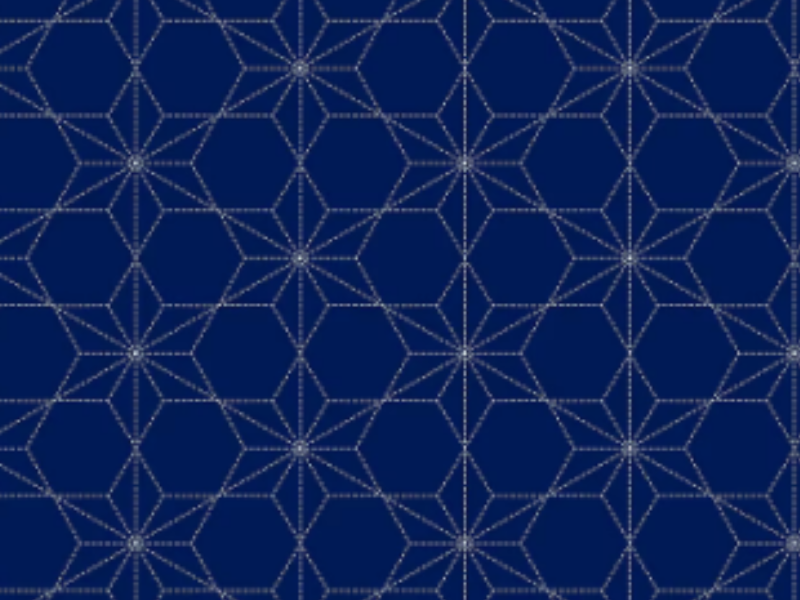
Sashiko means “little stabs,” and it began in Japan as a mending technique (boro) used to reinforce work clothes. It was practical and cheap: white thread stitched over indigo fabric, creating geometric patterns that strengthened the cloth and happened to be gorgeous while doing it. Today it’s a deeply respected technique, valued for its minimalist look as much as for the philosophy behind it: patience, repetition, durability.
Technique and Stitches
Sashiko relies almost entirely on the running stitch, worked with enough precision to form geometric patterns: asanoha (hemp leaf), seigaiha (waves), kikkō (tortoiseshell), and others. There are regional variations too, such as kogin from the Aomori region, which uses denser fills and its own set of patterns.
Materials and Tools
- Cotton or twill fabric, traditionally indigo.
- Sashiko thread, thick and sturdy (usually white).
- A long sashiko needle.
- Water-soluble markers or stencils for laying out your lines.
Uses and Projects
Sashiko works beautifully for reinforcing clothes (visible mending patches), blankets, pillows, quilts, and modern home decor like table linens and tote bags. It’s ideal for projects that call for quiet elegance and meditative repetition. One practical tip: mark your lines with a pen that erases with water or heat, and keep the fabric tension consistent throughout.
Ribbon Embroidery: Dimension and Realism
History and Essence
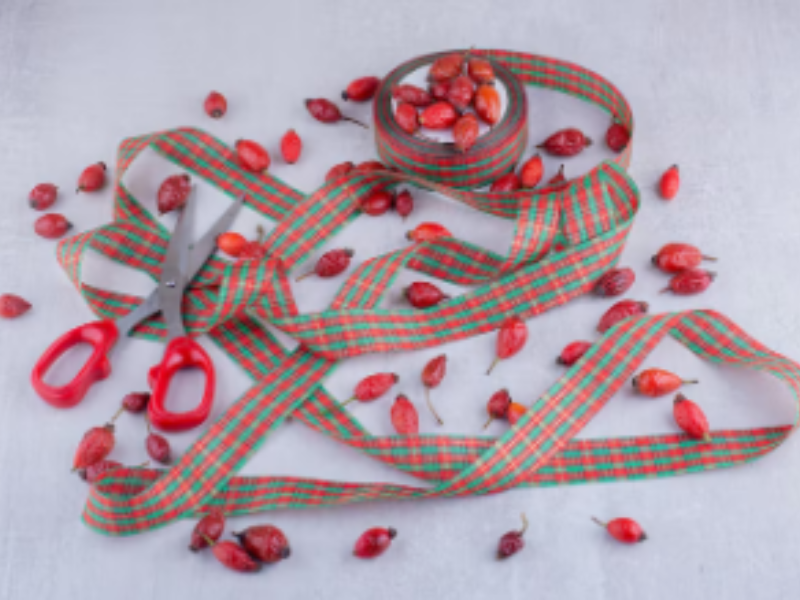
Ribbon embroidery flourished in Europe during the 18th and 19th centuries and was hugely popular in Victorian fashion. It uses ribbon (silk, satin, or organza) to create raised flowers that look almost real.
Signature Stitches and Techniques
The most common stitches are the ribbon stitch, the ribbon rose, the twisted ribbon stitch, and the petal stitch. These are usually paired with French knots and traditional stitches for flower centers and finer details.
Materials
- Silk or satin ribbon, 3 to 12 mm wide depending on the effect you want.
- Chenille needles with a large eye.
- A sturdy base fabric such as linen or cotton.
- Floss for details and knots.
Projects and Tips
Ribbon embroidery is ideal for pillows, floral brooches, wedding decor, and framed pieces. To get good results, don’t pull the ribbon too tight. Leave a little slack so the dimension holds, and anchor everything with small, well-hidden stitches. I love combining ribbon embroidery with free-form embroidery to build soft, subtle backgrounds.
Blackwork: Elegance in Black and White
Historical Origins
Blackwork is an English embroidery style that peaked during the Renaissance. Worked in black thread on pale fabric, it became a status symbol at court. Many people associate it with the shirts of Henry VIII and the silverwork of the period.
Technique and Motifs
Blackwork is built on geometric and lattice patterns. It typically alternates two kinds of stitching: outlines worked in double running stitch (also called Holbein stitch), which look identical on both sides of the fabric, and repeated filling stitches that build up texture, such as seed stitch and rice stitch. Black was the traditional choice, but stitchers today use any color they like for that same graphic punch.
Materials and Uses
- Cotton or silk thread, traditionally black.
- White linen or cotton fabric.
- A fine needle for small stitches.
You’ll mostly see it on clothing, cuffs, and decorative accents. It takes precision and patience.
Mexican Embroidery: Living Tradition, Explosive Color
The Big Picture and the Regions
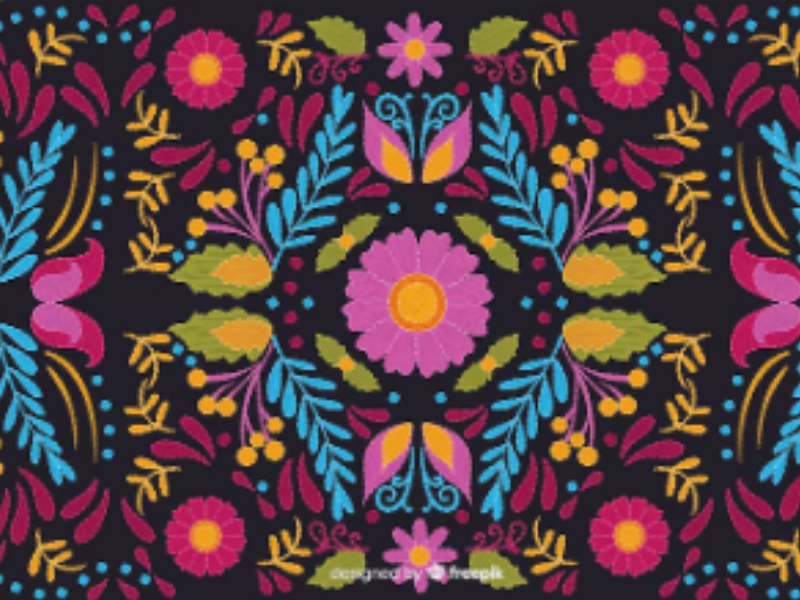
Talking about “Mexican embroidery” means talking about a whole constellation of styles: tenangos from Hidalgo (Otomí), Chiapas embroidery, Oaxacan embroidery, Veracruz embroidery. Every region has its own vocabulary of symbols: fantastical animals, lush flowers, geometric motifs, and intensely saturated color palettes.
Techniques and Materials
- Satin stitch, filling stitches, chain stitch, and a variety of knots.
- Vividly colored cotton thread, sometimes silk.
- Cotton fabric, often in the form of traditional blouses called huipiles.
Meaning and Uses
These pieces tell stories: myths, family lineages, everyday scenes. They’re a form of cultural identity as well as a source of income for many communities. In contemporary fashion, the same motifs get reworked into blouses, accessories, and home goods.
Projects and Recommendations
If you want to learn, start small with simple floral motifs. Bold color is essential to the look. Please respect where these designs come from: if you sell work inspired by these techniques, credit the tradition and collaborate with local artisans whenever you can.
Whitework: Subtlety, Negative Space, and Geometry
Varieties and Origins
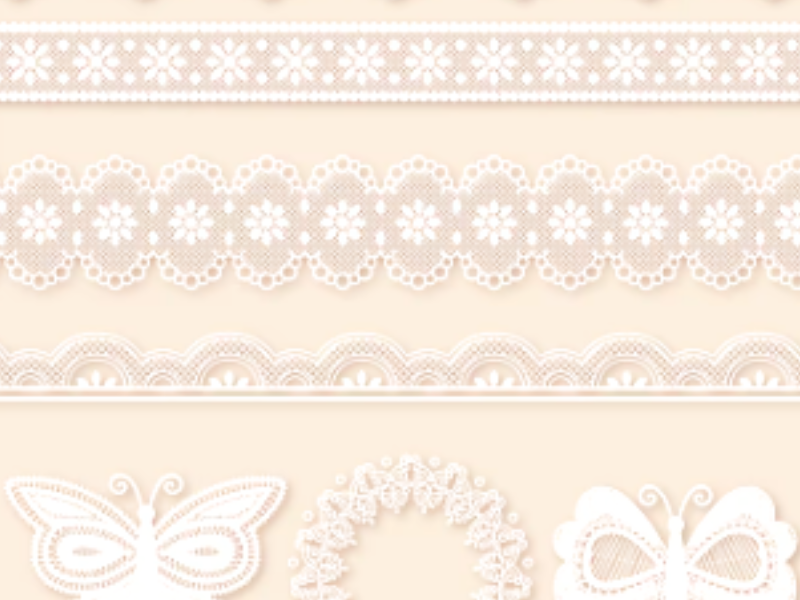
Whitework is an umbrella term for several techniques in which white thread on white fabric does all the work: broderie anglaise, Hardanger from Norway, drawn thread work, and Ayrshire work. Traditionally used for underclothes, table linens, and bed sheets, it’s shorthand for elegance and fine detail.
Standout Techniques
- Hardanger: cutting away sections of fabric and stitching around them to create geometric openwork.
- Broderie anglaise: eyelets combined with decorative stitching.
- Drawn thread work: pulling threads out of the weave and wrapping the remaining bars.
Materials and Projects
You’ll want high-count linen or cotton, white perle cotton or stranded floss, and fine needles. It’s a natural fit for bed linens, baby clothes, bridal wear, and heirloom table linens.
Goldwork: Luxury, Shine, and Tradition
History and Prestige
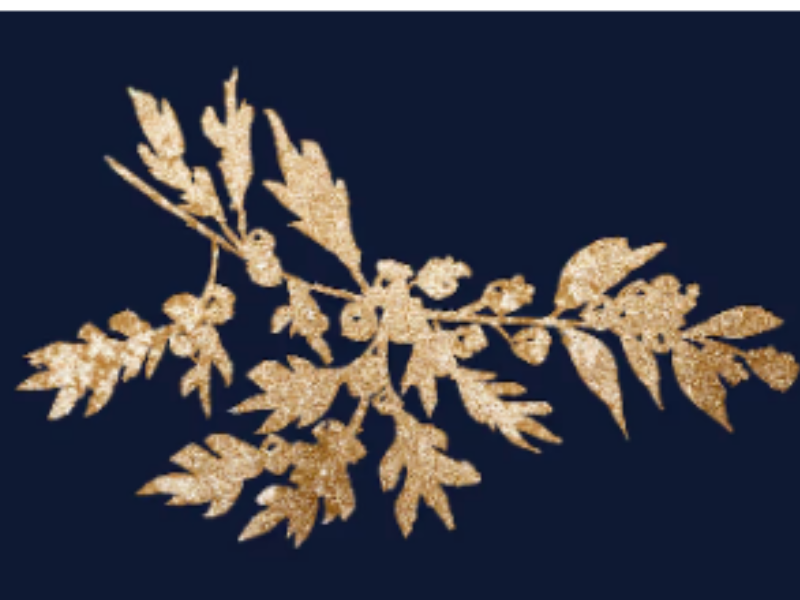
Embroidering with metal threads, known as goldwork, has roots in both Asia and Europe, historically tied to religious vestments and military uniforms. Working with gold or silver threads, or with metal-wrapped threads, has always signaled status.
Techniques and Materials
- Couching: laying the metal thread on the surface and tacking it down with tiny stitches.
- Bullion, purls, and beads: techniques for building up texture and relief.
- Real metal threads, or the more affordable synthetic-wrapped versions.
Applications
Think ecclesiastical embroidery, theatrical costume, and formal dress. This one takes patience and some specialized tools, including a stitching cushion and very fine pins. The payoff is spectacular: pieces with real dimension, shine, and heft.
Crewel: Embellishing with Wool
Origins
Crewel is embroidery worked in worsted wool, widely practiced in England from the Elizabethan era onward to decorate curtains, wall hangings, and clothing.
Techniques and Stitches
Satin stitch, stem stitch, chain stitch, and long-and-short stitch for shading with heavier wool. The style is instantly recognizable thanks to its Jacobean florals and animals.
Projects and Materials
You’ll need a chenille or crewel needle sized for wool, thicker threads, and a sturdy ground fabric like linen twill. Perfect for pillows, wall hangings, and any piece where you want warm, rustic texture.
Stumpwork: Raised, Three-Dimensional Embroidery
What It Is and Where It Came From
Stumpwork is raised embroidery that emerged in England during the 16th and 17th centuries. Its calling card is three-dimensional elements: lifted flowers, figures, and forms that read almost like miniature sculptures.
Core Techniques
Stumpwork uses stuffing and padding, detached buttonhole stitch, couching, and separately worked pieces that get stitched onto the base later. Wire and stiffened elements can be added to hold a shape upright.
Projects and Recommendations
It’s perfect for highly decorative framed pieces, soft sculpture, and museum-quality work. It takes time and practice, but the effect is stunning.
Free-Form Embroidery: The Contemporary Voice
What It Means
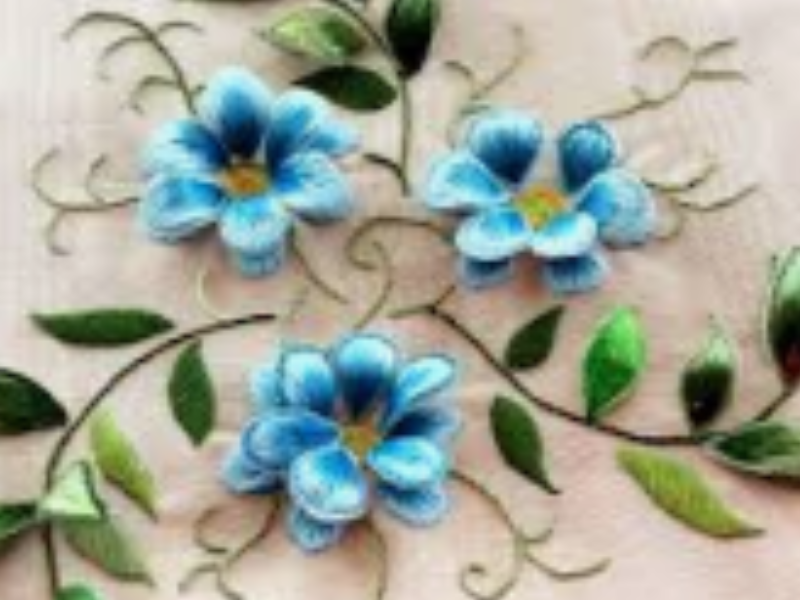
Free-form embroidery isn’t tied to rigid charts or counted threads. It’s the go-to technique for anyone who wants to paint with thread, using the needle like a brush to create illustrations, lettering, and full scenes.
Stitches and Materials
You’ll mix basic stitches (satin, stem, French knot) with threads of different textures, plus sequins and beads. It’s usually worked on linen or cotton, and it’s a deeply personal way to make something.
Projects
Everything from art pieces for the wall to patches for your jacket and small textile experiments. It’s the best way to develop a style of your own.
Tambour: Chain Stitch with a Hook (Haute Couture)
Origins and Modern Use
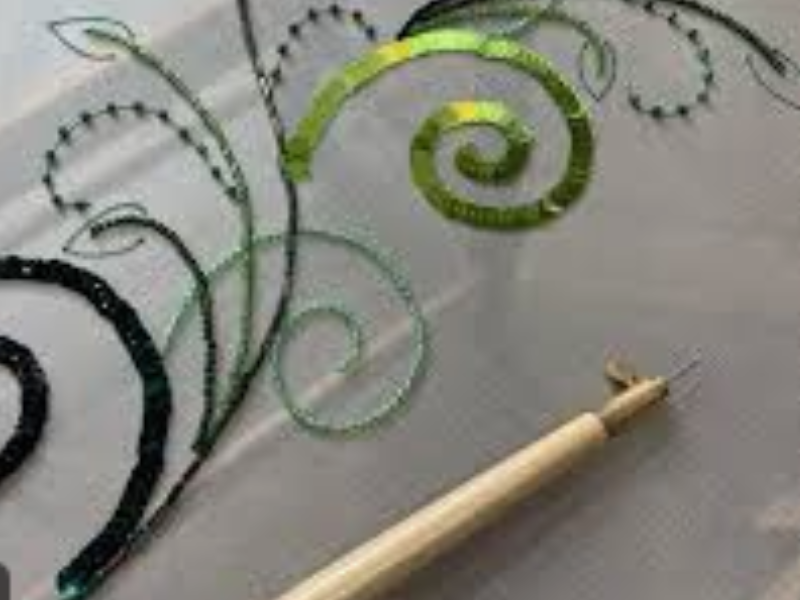
Tambour is a chain-stitch technique worked with a fine hook, similar to a tiny crochet hook, on fabric stretched tight in a frame. It’s been a staple of haute couture for generations (tambour beading shows up in plenty of fashion ateliers today) thanks to how fast it is and how clean the chain finish looks.
Technique and Materials
You’ll need a tightly stretched frame and a tambour hook. The result is a continuous chain that can also carry beads or appliqués. Expect a learning curve, and invest in decent tools.
Applications
Haute couture, commercial embroidery, and beadwork. It’s quick, and the effect is elegant and seamless.
Kantha: Stitching to Give Fabric a Second Life (India/Bengal)
Origins and Philosophy
Kantha comes from Bengal and began as a technique of reuse: women layered several pieces of worn fabric, often old saris, and held them together with simple straight stitches to make quilts, blankets, and repairs.
Techniques and Motifs
It’s all running stitch, worked in continuous lines that form geometric or figurative patterns. The imagery tends to be simple: animals, flowers, and scenes from daily life.
Projects and Care
Kantha is perfect for quilts, blankets, and pieces with a rustic feel. If you work with recycled materials, the result carries real emotional weight along with its sustainability.
Needle Lace and Cutwork: Handmade Lace
What They Are
Needle lace and cutwork are advanced techniques that build openwork and lace without any pre-made ground fabric to support them. Reticella and point de Venise are two well-known historical examples.
Techniques and Challenges
Needle lace demands patience, precision, and proper support (frames, paper patterns). You’ll find it in museum pieces, bridal wear, and historical restoration work.
Bead Embroidery
Techniques and Materials
Bead embroidery means stitching beads, sequins, and crystals directly onto fabric. It pairs well with blackwork, tambour, and free-form embroidery. It calls for patience and a good sharp beading needle.
Applications
Dresses, accessories, handbags, and occasion wear. It adds sparkle and texture instantly.
Appliqué and Crazy Quilting: Eclectic by Design
What They Are
Appliqué means stitching pieces of fabric onto a base to build up images or designs. Crazy quilting is a patchwork technique where irregular panels get covered in embroidery and lace.
Projects
Art quilts, pillows, bags, and framed pieces. It’s the ideal way to use up your scrap pile on something deeply personal.
Embroidery in the Islamic and Turkish World: Geometry and Symbolism
Characteristics and Techniques
Embroidery traditions across the Islamic world lean heavily on geometric and plant-based motifs along with metal threads. Notable approaches include embroidery worked over ikat cloth and the use of repeating patterns loaded with centuries-old symbolism.
Which Style Should You Learn First?
If you’re just starting out, here’s what I’d suggest:
- Cross stitch, to get a feel for the weave and for counting.
- Free-form embroidery, to be creative without strict rules.
- Sashiko, if you want something repetitive, calming, and genuinely useful.
For the advanced techniques (goldwork, stumpwork, needle lace), an in-person class is worth the money, or at least a tutorial with lots of step-by-step photos.
Caring for Your Embroidery (Quick Reference)
- Hand wash with a mild, pH-neutral soap.
- Rinse in cold water.
- Dry flat, out of direct sunlight.
- Press from the back with a pressing cloth.
- Store between sheets of acid-free tissue paper, never sealed in plastic.
- Frame with a non-adhesive mount and UV-filtering glass.
Frequently Asked Questions
Which technique makes the best gift?
For something quick and eye-catching, ribbon embroidery or bead embroidery tends to be a hit. For something traditional and sentimental, Mexican-inspired embroidery or classic cross stitch works beautifully.
Is embroidery expensive to learn?
Not at all. Most styles need only a needle, thread, and fabric, so you can get started for very little. Goldwork is usually the priciest, thanks to the metal threads and specialty supplies.
Can I mix techniques in one project?
Absolutely. Sashiko combined with free-form embroidery, or ribbon embroidery layered over a cross-stitched background, can turn out beautifully original. Combine with care (and good taste) and you’ll end up with something no one else has.
Where can I find historical patterns?
Museums, digital libraries, and books on historical embroidery are absolute treasure chests. The Victoria & Albert Museum, national museum archives, and collection catalogs are incredible resources.
Embroidery is a universe of its own. Every technique teaches you a different way of looking at fabric, from the gridded precision of cross stitch to the repetitive minimalism of sashiko, with the luxury of goldwork and the freedom of free-form work in between. For me, there’s no better way to spend an afternoon than with a needle and thread: creativity, calm, and cultural connection all in one simple gesture.
So, are you up for trying something new? Which technique is calling your name? Tell me in the comments. I’d love to hear from you, see your projects, and keep learning right alongside you.