Discover how to turn your home into a genuine oasis of well-being this summer with these 7 detailed steps for keeping your house cozy in summer, no complications and no big spending.
It’s surely happened to you that when summer arrives, your home somehow becomes a less appealing place than usual. That corner where you loved curling up with a throw now feels stifling, and the heat trapped in the walls leaves you unable to fully rest, even once night falls.
There’s a widespread idea that a cozy home is a winter thing, a concept tied to cold weather, hot chocolate, and heavy blankets. The reality is that cozy can and should adapt to every season, because our home should always be our refuge.
In the hot months, that feeling of home doesn’t come from physical warmth but from absolute freshness, from lightweight materials, and from creating an atmosphere that’s a real break from the high temperatures outside.
Keeping your house cozy in summer means designing a refuge where the air actually flows, where the colors relax your eyes the moment you walk in, and where the scents carry you somewhere cool and natural. You don’t need a full renovation, and you don’t need to spend a fortune on air conditioning, as long as you know how to work smartly with what you already have on hand.
Throughout this post we’ll look at how small changes in textiles, masterful light management, strategic use of plants, and certain daily rituals can completely transform how you experience your home.
The goal is that when you put your key in the lock and step through the door, you feel that immediate relief and that sense that your house is the best place in the world to spend your vacation and hide from the sun.
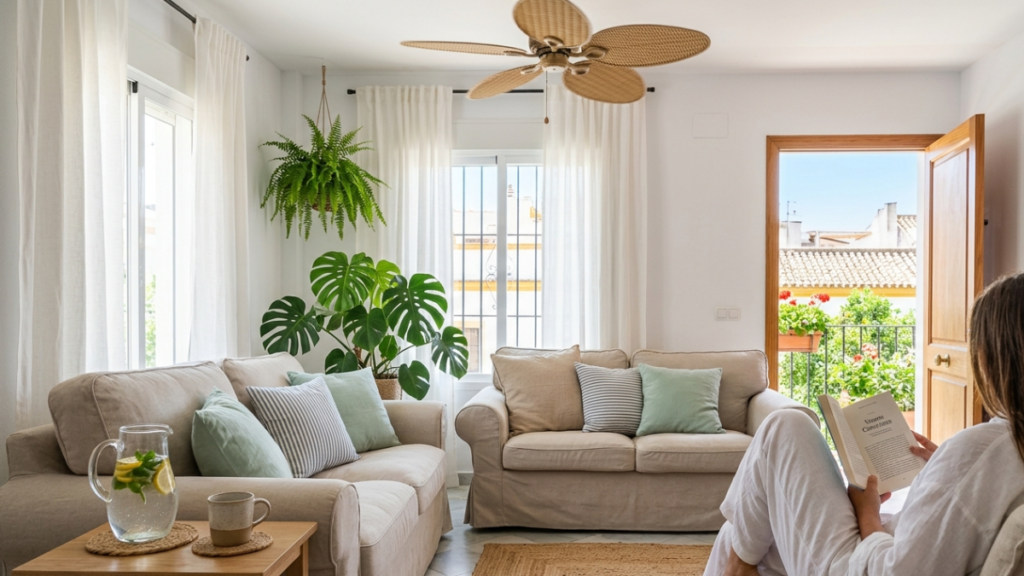
Illustrative image created with AI assistance
This post contains affiliate links. If you buy through them, you’re supporting my work (at no extra cost to you).
We often forget that comfort is a sensory thing. It isn’t only about the number on the thermometer, it’s about how we feel in a space. A home visually crowded with dark, heavy objects will read as hot even with the AC cranked all the way up. A clear home, on the other hand, with natural fabrics that let the breeze through and soft lighting, will make us feel much cooler.
| Step | Main action | The expert trick |
| 1. Textiles | Swap synthetics for 100% linen and cotton. | Pull up the pile rugs and use jute or plant fibers. |
| 2. Light and heat | Go into cave mode during the sunny hours. | Air the house out only from 6 to 8 a.m. to trap the cool air. |
| 3. Visual order | Clear your surfaces and use light colors. | White and dusty blue lower how warm a room feels. |
| 4. Plants | Create corners with large-leafed plants. | Mist the leaves at dusk to cool the room. |
| 5. Scents | Use citrus, mint, or eucalyptus in a diffuser. | Skip large candles; the cool mist of a diffuser works better. |
| 6. Lighting | Use warm, indirect LED lights. | A ceiling fan with wooden blades decorates and cools. |
| 7. Rituals | Set up a drink station with water and ice. | Wear loungewear in natural fabrics for better comfort. |
Step 1. The textile and natural fiber revolution
Our first point of contact with a cozy summer home is touch. What we touch determines how we feel. In winter we want fabrics that hold our body heat, but in summer we need exactly the opposite: materials that let air circulate and moisture evaporate quickly. If you want cool decor, you have to start by undressing your house of everything heavy.
Linen as the absolute star
If one material defines a cozy home in summer, it’s linen. It’s an incredible natural fiber that’s been used for centuries precisely because of its thermal properties. Linen can absorb up to twenty percent of its weight in moisture without feeling wet to the touch. Its structure is also far more open than cotton’s, which helps air pass through the fabric and keeps us cool.
You don’t have to change all your furniture. Just put linen covers on your pillows, or drape that hot synthetic sofa with a large linen sheet in natural or stone tones. That small barrier keeps sitting down to watch a movie from turning into sticky torture. Linen also has that beautiful natural wrinkle that gives your living room a relaxed, unpretentious feel.
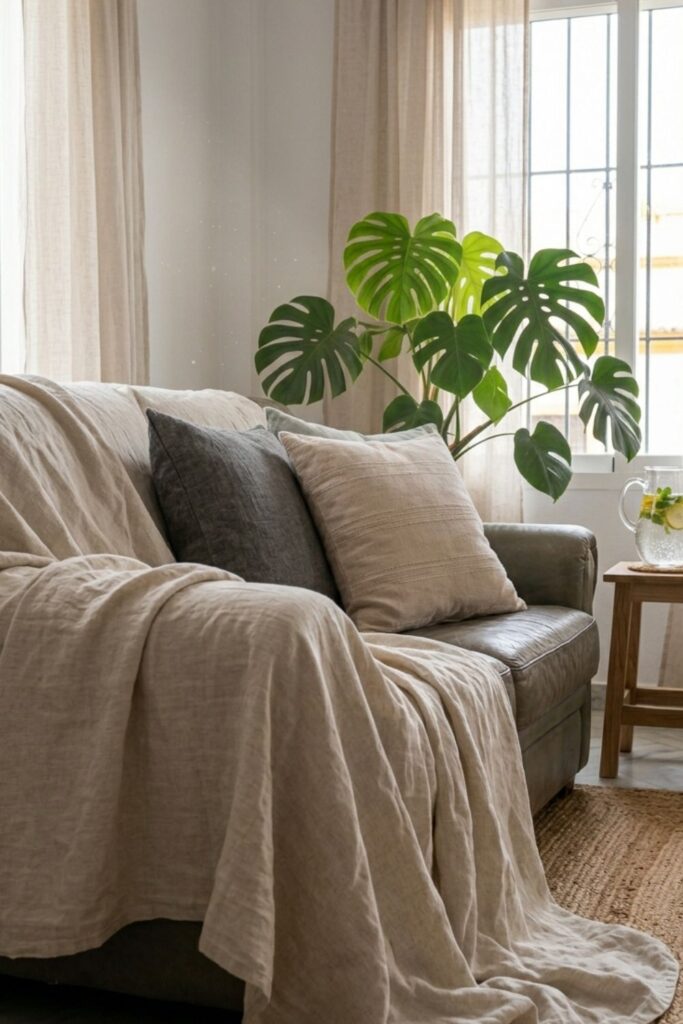
Reach for linen and percale cotton. Illustrative image created with AI assistance
Percale cotton for real rest
In the bedroom, the switch is mandatory. Many sheets on the market today say cotton but include a polyester blend so they wrinkle less. The problem is that polyester is plastic, and plastic doesn’t breathe. If you want to sleep well without waking up soaked in sweat, look for one hundred percent cotton sheets, preferably in a percale weave.
Percale is a weave that produces a matte fabric, very soft and above all cool and crisp to the touch. It’s that luxury hotel bed feeling that invites you to rest the moment you touch it. Get rid of any quilted coverlets or comforters, no matter how thin they claim to be. In August, quality sheets are all you need to make your bed the cozy summer refuge you’re after.
Plant fiber rugs
Plenty of people take up all their rugs in summer, which is a valid option, though sometimes the floor ends up feeling too cold or bare. If you want the visual warmth of a rug without the physical heat of wool, switch to plant fibers. Jute, sisal, and hemp are wonderful options.
These fibers don’t hold heat, and they add an organic, natural note that works with any decorating style. Walking barefoot on a jute rug is a lovely experience, because it massages the sole of your foot and always stays at a neutral temperature. They’re also hardy materials that handle summer traffic well, along with the sand you track in from the beach or general dust.
Step 2. Masterful management of light and heat
Keeping a house cozy in summer requires becoming an expert in natural climate management. If your windows have blinds, shades, or shutters, learning to use them in your favor lets you cool the house without air conditioning, or at least with much less of it.
The cross-ventilation technique
You’ve surely heard about this a thousand times, but are you doing it right? The trick is timing. Ventilation should only happen when the outside temperature is lower than the inside temperature. That’s usually between six and eight in the morning. Open every window and interior door so a current forms and sweeps out the hot air that built up overnight.
As soon as the sun starts to heat things up, close everything tight. Don’t make the mistake of leaving a window open “to get some air” at noon, because all you’ll get is 95 degree air heating up your walls. The secret to a cool home is keeping that morning air trapped inside as long as possible.
Strategic cave mode
This is where window coverings come in. You don’t have to live in total darkness, but you do need to shield the glass. A windowpane acts like a radiator. Direct sun on it heats the air behind it relentlessly. Lower your blinds until only a little light filters through, or use awnings if you have them.
To keep the look of a cozy summer home, use very lightweight interior curtains, like white sheers in gauze or linen. White reflects solar radiation back out instead of absorbing it. Filtering the light this way gives your living room a soft, diffused glow that’s far cozier than the aggressive glare of midday sun.
Smart use of fans
The ceiling fan is a cozy home’s great ally. Unlike air conditioning, which can dry out the air and create an artificial atmosphere, a fan simply moves air around, helping your body cool itself naturally. Make sure the blades spin counterclockwise in summer so they push air downward and create that lovely breeze.
If you use floor fans, a classic trick is placing a bowl of ice with a little coarse salt right in front of the airflow. It isn’t magic, it’s physics. The air cools as it passes over the ice and the temperature feels lower immediately. It’s ideal for those afternoon moments when time seems to stand still.
Step 3. Color therapy and visual clarity
Did you know your brain can feel cooler based purely on what your eyes see? Order and color have a direct impact on how warm we feel. A home full of clutter, with dark colors and crowded surfaces, creates a heaviness that increases the sense of oppression.
Colors that lower the temperature
For cool-feeling decor, go with a light color palette. White is the base, but you can play with tones that evoke water or greenery. Dusty blues, mint greens, and very soft grays are ideal. These colors sit at a wavelength our brains associate with cold and calm.
If you don’t want to paint, change the details. Art with natural motifs, clear glass vases, or bath towels in aquamarine can completely change how a room reads. It’s about subtly tricking our senses into feeling like they’re somewhere cooler.
Summer minimalism
Clutter creates stress, and stress raises our body temperature. In summer, less is more. Clear your kitchen counters, remove heavy ornaments from your shelves, and let the air (and your gaze) circulate. A clear room looks bigger and, therefore, better ventilated.
This step includes your closets too. If you open the closet and see wool coats or blankets, your mind takes a hit of “hot.” Store everything that smells like winter in boxes under the bed or on a high shelf. Seeing only light clothing and empty space will help you feel much lighter in your own home.
Step 4. The botanical oasis: plants that cool a room
Plants don’t just decorate, they’re living things carrying out a process called evapotranspiration. That means they release water vapor into the air, which helps humidify and cool it naturally. It’s like having a small ecological cooling system at home.
Which plants to choose for the heat
Not every plant handles a hot summer well, but some are genuine champions. The snake plant (Sansevieria) is ideal because it purifies the air and takes high temperatures without flinching. Ferns are wonderful as long as you keep them hydrated, since all those fronds release plenty of moisture.
Another great choice is pothos or spider plants. They’re easy to care for and bring that vibrant green that rests your eyes. Group them all in one corner and you’ll create a humid microclimate you can feel the moment you walk up to it. It’s the perfect spot for your reading chair and a moment of peace.
The watering and misting ritual
In summer, watering can become a lovely ritual. If you have large-leafed plants like a ficus or a monstera, try misting the leaves with cool water at dusk. That water evaporating will drop the room’s temperature a couple of degrees, and the smell of damp soil gives an incredible sense of freshness, as if a summer storm had just passed through.
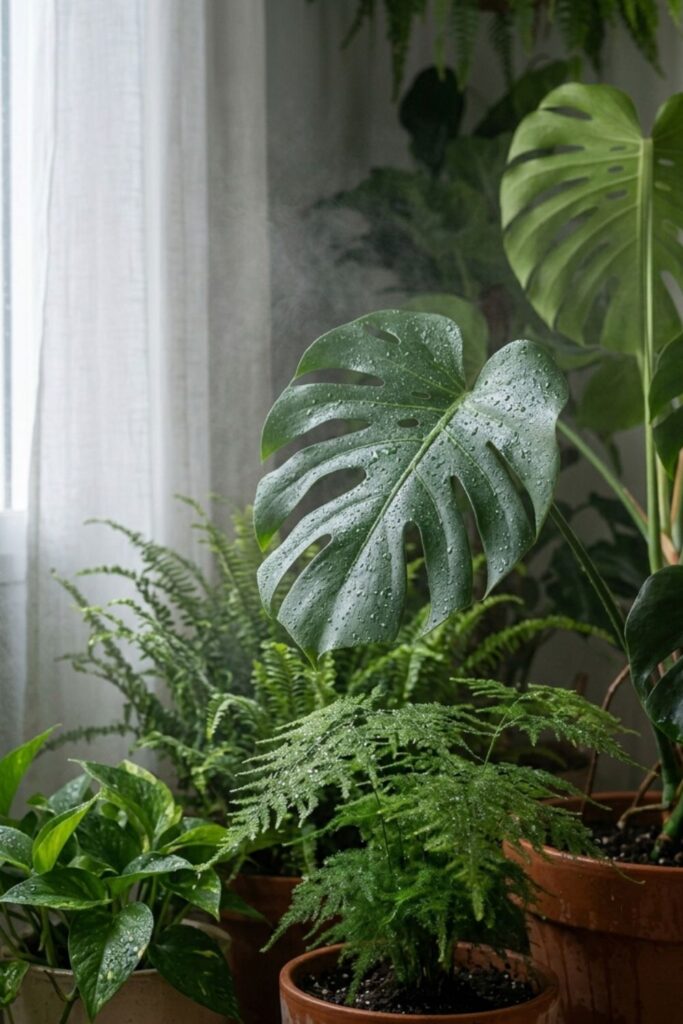
Plants help keep a room feeling fresh. Illustrative image created with AI assistance
Step 5. Summer scents and sensations
Smell is the sense that connects fastest to our emotions and memories. For a cozy home in summer, you have to swap the heavy scents of vanilla and cinnamon for notes that evoke cleanliness and nature.
Citrus and herbal fragrances
Look for essential oils or candles in lemon, bergamot, verbena, or mint. These scents are refreshing and help clear your head. An ultrasonic essential oil diffuser beats a candle in summer, since it generates no heat and adds a very fine mist of water to the air, which is welcome when the AC has dried everything out.
Another foolproof scent is lavender or eucalyptus. Eucalyptus in particular creates a sense of open airways that makes the air you’re breathing feel purer and cooler. Hang a few fresh eucalyptus branches in the shower and the steam will release their oils, turning your bathroom into a refreshing spa.
The touch of water
If you have the option, the sound of water is one of the best tricks for a cozy summer home. A small decorative fountain in the living room or on the patio creates an acoustic sense of coolness that’s almost magical. The brain associates running water with a cool, shaded environment, which helps lower the anxiety extreme heat brings on.
Step 6. Evening lighting and calm
Once the sun goes down, it’s time to truly enjoy our home. Switch on every overhead light, though, and we break that calm atmosphere while generating unnecessary heat.
Warm, focused lighting
Avoid white or very bright lights. Go with table lamps and warm-toned LED bulbs that give off no heat. Place several points of indirect light to create soft shadows. That not only makes the house look beautiful, it invites you to slow down and get ready for restorative sleep.
String lights are another fantastic summer option. They give a patio or garden feel even inside an apartment. That soft, playful lighting is the essence of cozy on an August night.
The charm of dinner by candlelight
It may sound contradictory, but a few small candles during dinner (as long as there aren’t many) bring an emotional warmth that balances out summer’s austerity. Look for candles scented like sea breeze or fresh cut grass. Eating in low light helps your body cool down and your mind unplug from the day’s stress.
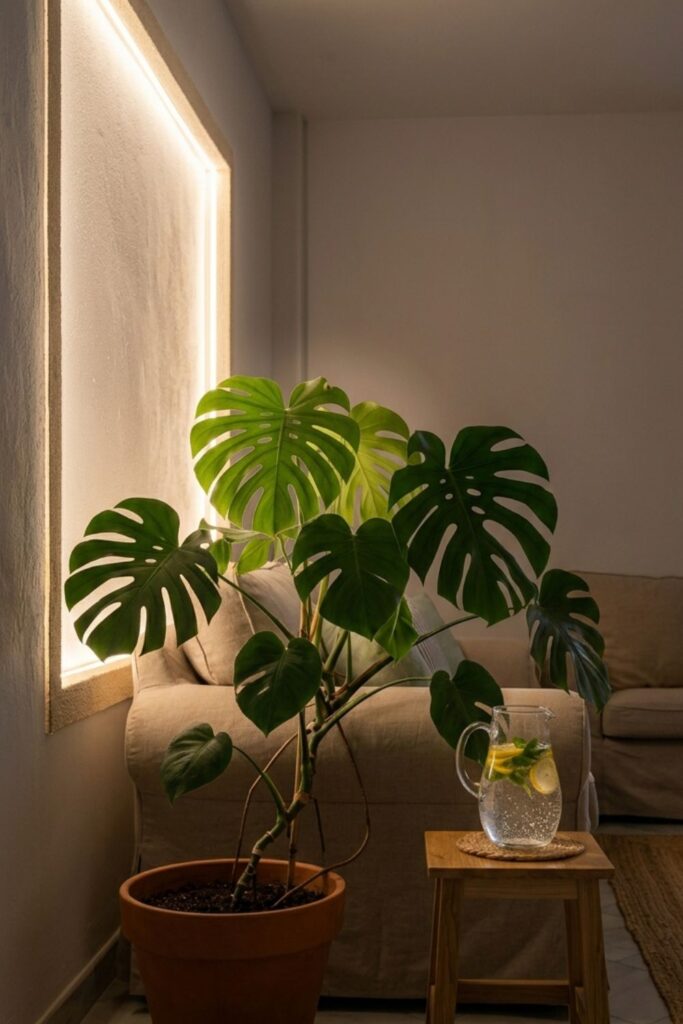
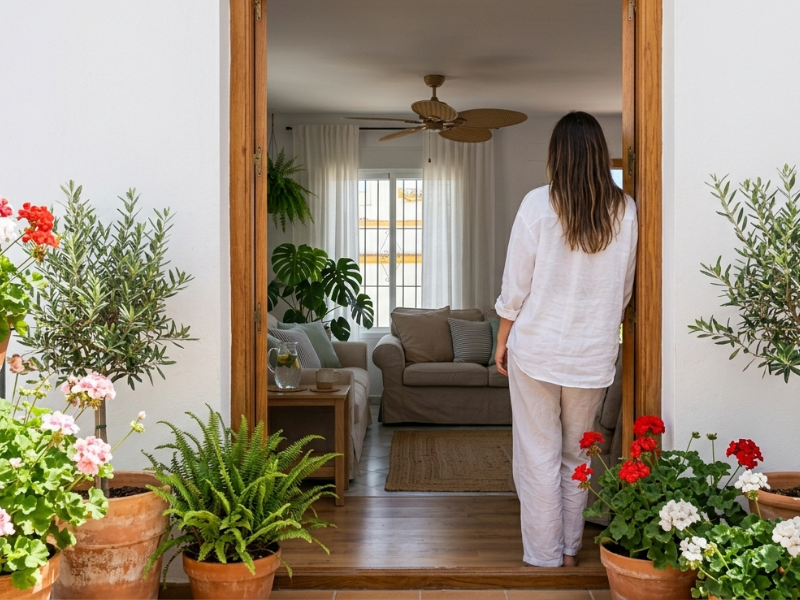
Keep the sun’s heat out. Illustrative image created with AI assistance
Step 7. Wellness rituals and the pleasure of the everyday
For a house to truly be a home, there has to be life and enjoyment in it. Perfect decorating means nothing if we don’t let ourselves enjoy the pleasures the season offers.
The hydration corner
Set up a drink station in your kitchen or on a cart in the living room. A pretty glass pitcher of water with cucumber slices, lemon, and a few mint leaves is the epitome of summer cozy. Having something cool and beautiful always within reach makes taking care of yourself much easier and more pleasant.
Why loungewear matters
Don’t forget about yourself. To feel good in your home, what you wear counts too. Choose nightgowns or pajamas in silk or fine cotton. Looking good and feeling cool completely changes how we perceive our surroundings. A linen robe to wear around the house after a cool shower is the finishing touch that makes you queen of your own oasis.
Frequently asked questions about keeping your home cozy in summer
Is a ceiling fan or air conditioning better for a cozy home?
Both have their place. AC is necessary for bringing the temperature down during extreme heat, while a ceiling fan keeps the air moving and creates a more natural, welcoming feel. The ideal is combining them: cool the house with the AC and maintain comfort with the fan.
How can I get rid of a musty smell in summer?
Musty smells usually come from poor ventilation or from overusing badly maintained air conditioners. Make sure you clean your AC filters and always air the house out first thing in the morning. Activated charcoal or purifying plants like a peace lily help a lot too.
Which fabrics should I avoid at all costs?
Avoid velvet, corduroy, faux fur, and any kind of heavy polyester. These materials trap body heat and don’t breathe, which will make you uncomfortable within minutes.
How do I cool a room with no windows?
If you have a room with no direct ventilation, use a powerful fan and keep the door open so air circulates from other parts of the house. Adding low-light plants and using very light wall colors will also keep it from feeling so stifling.
Tell me your tricks!
I hope these 7 steps help you see your home with fresh eyes this summer. You don’t need to make big investments, it’s about tending to the details and understanding that comfort is a matter of sensations too. In the end, what matters most is that your home is the place where you can be yourself and truly rest.
Do you have a special trick for keeping your home cool and welcoming that I haven’t mentioned? Which of these steps are you going to try today? I’d love for you to tell me in the comments. Let’s talk and share ideas for a perfect summer at home!