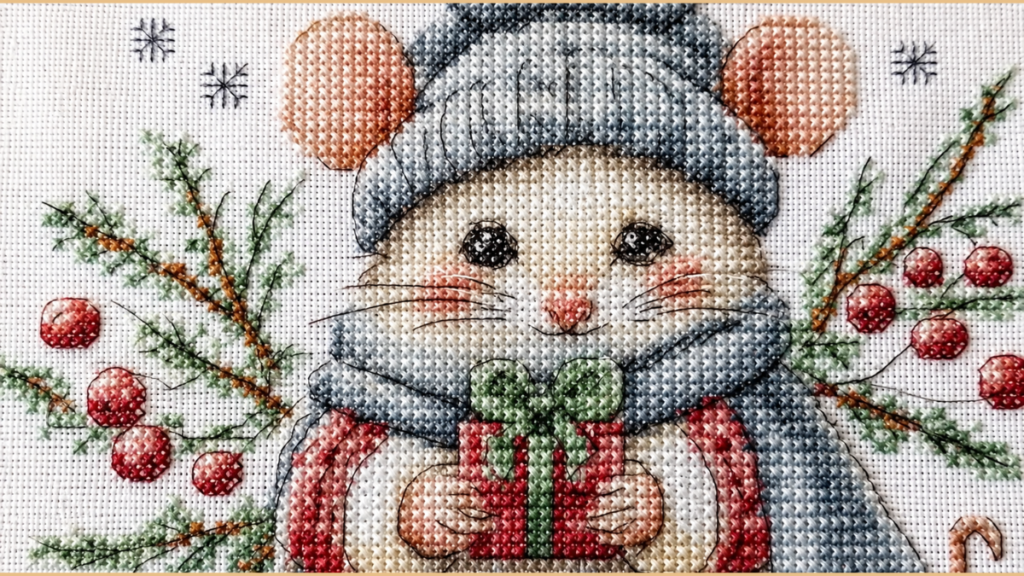
Discover how to make a beautiful cross stitch mouse step by step. Materials, tips, care, common mistakes, and ideas for creating a charming, one-of-a-kind holiday piece.
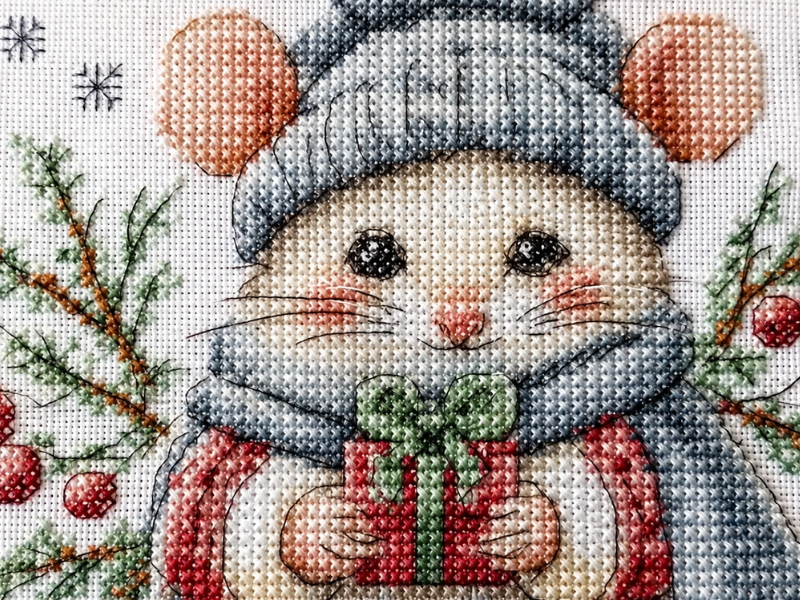
Of all the designs you can stitch, the cross stitch mouse is one of the sweetest and most endearing. There’s something irresistible about those little mice in scarves and knit hats, or holding a tiny gift. They’re designs full of personality that bring warmth to any corner of the house.
They also have that handmade charm that never goes out of style. Every stitch turns a piece of fabric into something unique that can end up part of your decorations for many years. That’s exactly why more and more people look for mouse cross stitch patterns to create special ornaments, framed pieces, pillows, or small gifts with real sentimental value.
This post contains affiliate links
Why cross stitch mice have so much charm
A design full of personality
Plenty of motifs are classics that never fail. Trees, stars, reindeer, and snowflakes always work. Mice have something different about them, though. They convey tenderness so naturally and make any piece feel warmer and more personal.
A mouse might be holding a star, hiding among holly branches, or baking cookies. Every small detail gives the design a life of its own. That’s precisely what makes this kind of cross stitch pattern so special.
They’re also very versatile designs. Some have a sweet, childlike style, while others go for something more elegant or vintage. Depending on the colors and the finishing, they can fit perfectly into rustic decor or a more classic home.
Handmade pieces carry a special value because they hold time, patience, and dedication. An embroidered mouse can become a piece that reappears every December and brings back lovely memories automatically.
The most beloved decorations often aren’t the most expensive ones, they’re the ones with a story. A small piece of embroidery can end up part of family tradition and become one of those ornaments that always returns to the same corner of the house when the holidays arrive.
Materials for making a cross stitch mouse
Which fabric to choose for a beautiful finish
Your fabric choice has a huge influence on the final result. For beginners, 14 count Aida is usually the best option because you can see the holes clearly and counting stitches is far easier.
If you want a more delicate, elegant finish, 16 count Aida or even linen can look gorgeous. Linen has a more handcrafted, sophisticated look, though it does take a bit more experience.
Fabric color changes the visual effect a lot too. White fabric adds brightness and makes the colors pop more. Beige or ivory tones create a warmer, cozier feel, especially in classic holiday designs.
Recommended needles and floss
Tapestry needles are the most comfortable for cross stitch because they have a blunt tip that won’t damage the fabric. For 14 count Aida, a size 24 needle is standard.
As for floss, quality brands are worth it. The colors stay more consistent, the threads tangle less, and the final result looks much cleaner.
A floss organizer also helps enormously when a design has a lot of color changes. It may seem like a minor detail at first, but saving time hunting for shades makes the whole project far more pleasant.
You can see the design on YouTube
How to start a cross stitch project without getting overwhelmed
Setting up properly from the start
One of the most common mistakes is starting too fast. It’s worth spending a few minutes organizing your materials, marking the center of the pattern, and prepping your floss.
That small investment up front prevents a lot of problems later. Miscounting a few rows can force you to undo a big chunk of your stitching, so the better organized the project is from the beginning, the more comfortable the whole experience will be.
Why enjoying the process matters
A lot of people abandon projects because they want to finish too quickly. Cross stitch works best when you enjoy it slowly. That’s a big part of its charm.
Stitching a mouse can become one of those small quiet moments in your day where you simply unplug and focus on something beautiful. Watching the design gradually appear on the fabric is deeply satisfying.
The most common mistakes when stitching a cross stitch mouse
Pulling the floss too tight
One of the most frequent errors in cross stitch is pulling too hard on the floss as you form the crosses. It often happens without you noticing, especially once you’ve been stitching a while and want to move fast. The problem is that the fabric ends up distorted and the crosses lose their consistency.
In a design with small details, uneven tension leaves some areas too tight and others too loose. The final result loses its crispness even when the pattern itself is lovely.
The ideal is keeping a natural, consistent tension. The cross should be well defined without straining the fabric. With practice it becomes automatic.
Miscounting your stitches
Miscounting is practically a cross stitch classic. However experienced you are, it happens sooner or later. Sometimes a moment’s distraction is all it takes to shift an entire row.
Many people use erasable markers to mark off finished areas, or visually break the design into small blocks. Tricks like that help enormously in avoiding big mistakes.
How to get a much prettier, more professional finish
Keeping every cross facing the same direction
This detail seems small, but it completely changes how your stitching looks. Every cross should run in the same direction so light reflects evenly across the piece.
When some crosses go one way and others go the other, the result looks messy even when it’s technically well done.
Over time this becomes second nature, though at the beginning it’s worth paying attention so you build the habit from the start.
Taking real care with your backstitch
Backstitch is what gives a design definition and personality. On holiday mice it’s usually used to outline the eyes, whiskers, paws, or small details on their clothes.
It often looks like a secondary step, but it completely transforms the result. Good backstitch is what gives your mouse expression and a life of its own.
Work it slowly and precisely, especially in small areas.
Washing and pressing your work properly
Once the stitching is finished, many people want to frame it or turn it into an ornament right away. It’s worth spending a few minutes cleaning it properly, though.
Fabric picks up dust, hand marks, or traces from the hoop. The best approach is washing the piece in cold water with a mild soap, without scrubbing hard.
Then let it dry flat on a towel and always press it from the back. Laying another cloth over the embroidery keeps the dimension of the crosses much better.
How to care for your framed cross stitch
Keeping it out of direct sunlight
Sun can fade colors considerably over time, especially the intense reds and greens typical of holiday decorating.
If the piece is going to be on display for many hours, it’s worth placing it somewhere that doesn’t get constant direct light. That way the colors stay vivid far longer.
Storing holiday ornaments properly
When the holidays end, many handmade pieces get shoved into boxes any old way. The problem is that humidity, dust, or creases can ruin your stitching.
The ideal is wrapping each piece in cotton fabric or acid-free paper and storing it somewhere dry. It’s also best to avoid completely sealed plastic bags, since they can trap moisture.
Choosing good frames
If you decide to frame your cross stitch mouse, quality materials are worth the investment. A good frame protects the work far better and shows off the stitching.
UV-protective glass helps preserve the colors for years. Using acid-free backing is important too, so the fabric doesn’t stain or deteriorate.
Frequently asked questions about the cross stitch mouse
Which fabric is best for starting out in cross stitch?
14 count Aida is usually the best option for beginners because you can see the holes clearly and counting stitches is much easier.
How long does an embroidered mouse take?
It depends on the size and the complexity of the pattern. A small design can be finished in a few hours, while a full scene can take several weeks.
Do I need to use a hoop?
It isn’t required, but it is highly recommended. A hoop helps keep your tension even and makes the finished stitching look much cleaner.
What do I do if I miscount my stitches?
The most important thing is catching the mistake as early as possible. Often undoing just a few stitches is enough to fix it easily.
How to stay motivated on long projects
Breaking the project into small parts
When a pattern is large, looking at the whole thing can feel a little overwhelming. It’s better to work in small sections and focus only on the next step.
Moving forward bit by bit makes the process far more enjoyable and prevents that feeling that the project will never end.
Enjoying your progress
In cross stitch it’s important to appreciate every bit of progress. Even a few rows can change the design enormously and bring the character to life.
Taking progress photos also helps you appreciate all the work you’ve done. We often don’t realize how far we’ve come until we compare the beginning with the final result.
Not chasing absolute perfection
Everyone who cross stitches makes mistakes at some point. Miscounting, grabbing the wrong color, or having to unpick stitches is all part of the process.
Handmade pieces have charm precisely because they aren’t perfect. That small human touch is what makes them special.
Why cross stitch keeps winning hearts generation after generation
It brings tradition and creativity together
Cross stitch has been part of decorating and textile work for many years, yet it keeps reinventing itself. New designs, colors, and styles keep it a thoroughly current hobby.
Holiday mice are a perfect example of that blend of tradition and creativity. They have a classic, cozy feel while still adapting to modern, minimalist, or vintage styles.
Handmade work is valued more than ever
More and more people feel the need to surround themselves with objects that have soul and personality. Against mass-produced decor, handmade pieces bring authenticity and warmth.
Cross stitch fits perfectly into that way of thinking about a home. It isn’t only about creating something pretty, it’s about enjoying the process and filling your house with details that genuinely mean something.
You don’t need tons of experience to begin. A simple design can turn out beautifully and become the start of a truly relaxing, creative hobby.
Now I’d love to hear what you think. Have you ever stitched a mouse, or do you prefer other designs? Are you more drawn to classic styles, vintage ones, or something more Scandinavian and minimal? Tell me in the comments, and share your favorite ideas for decorating with embroidery.