I’m bringing you six low-cost storage ideas for small apartments. Sometimes I walk into my living room and, between the embroidery hoop, the yarn from my latest crochet project, and the books piling up on the side table, I feel like the walls are closing in. Has that ever happened to you? That sense that no matter how much you tidy, there’s never enough room. I’ve learned something important along the way, though: the problem usually isn’t the square footage, it’s how we look at the space.
Living in a small apartment doesn’t have to be a constant battle against chaos. Quite the opposite, it can be the perfect excuse to surround ourselves only with what we truly love and to find creative solutions that give our home real personality.
Today we’re not talking about buying expensive cabinets or taking on renovations that keep you up at night. We’re talking about low-budget magic, about repurposing, about seeing your walls with fresh eyes, and about making the most of every corner with solutions that are as pretty as they are practical.
In the end, what we’re after isn’t just storing things. It’s creating a space where we can breathe, create, and connect with ourselves. Let’s turn that chaos into calm, step by step.
This post may contain affiliate links. If you buy through them, you’re supporting my work (at no extra cost to you).
Before you store, you have to let go
Before we rush out to buy bins or hang shelves, we need a moment of honesty. As creative people, we tend to accumulate: “this fabric scrap will be perfect for a pillow,” “this wooden box would be great for a chalk paint project.” Smart storage starts with letting go, though.
You can’t fit an ocean into a glass of water. For low-cost storage to work in a small apartment, we first have to filter. I call it the creative joy method: if a material or an object hasn’t inspired you to make anything in the past year, maybe it’s time to let it move on and leave room for something new. Organizing isn’t hiding the mess, it’s managing what actually adds value to your daily life. Once the space is clear, that’s when the real design magic happens.
1. Vertical storage as your lifesaver
If floor space is limited, look up. Walls are the most valuable asset in a small apartment and often the most underused. Forget conventional artwork for a moment and think of the wall as a canvas of usefulness.
The power of pegboards
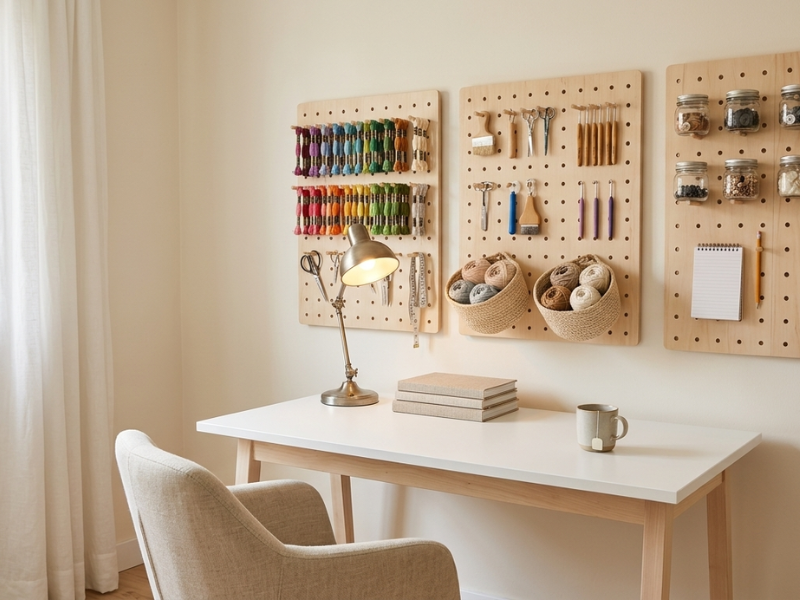
You’ve surely seen them in old workshops or design studios, but pegboards are a gem in any room. Best of all, they’re incredibly cheap. You can get them in natural wood or pressed fiberboard and paint them your wall color so they blend in completely. They’re also easier to find than you’d think, at Amazon or any hardware store.
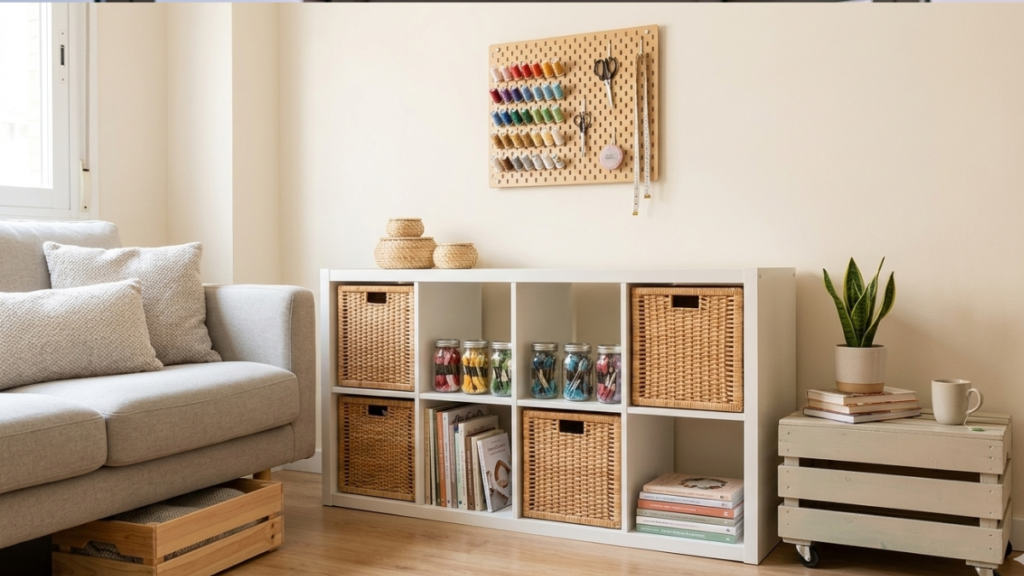
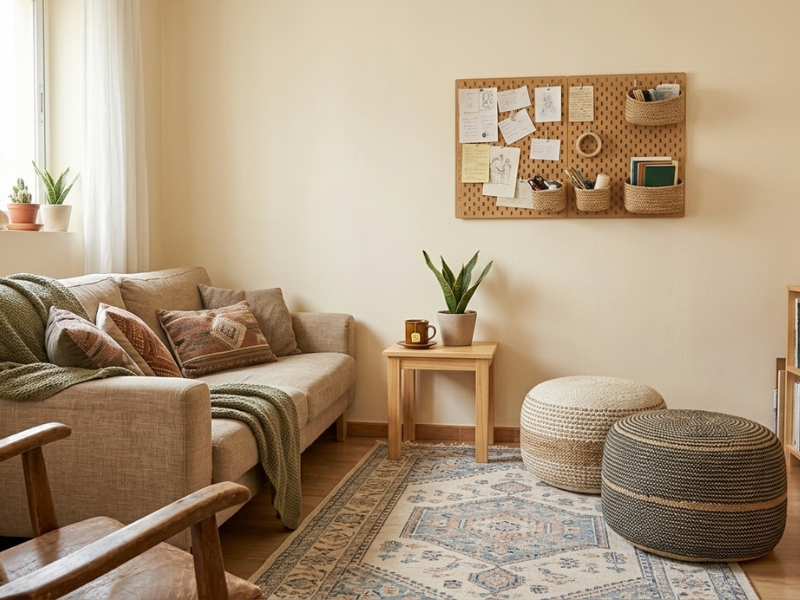
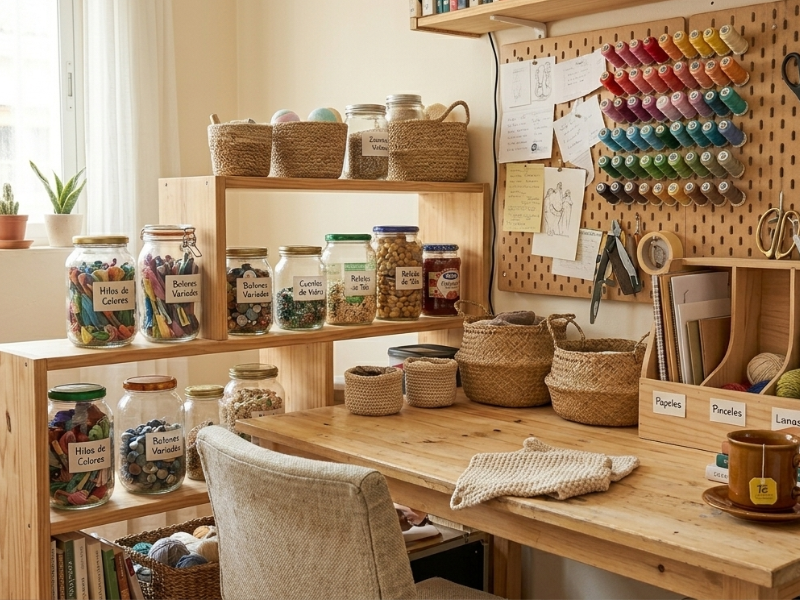
In my sewing corner, the pegboard is king. My floss is organized by color, my scissors are within reach, and small baskets hang for needles and measuring tapes. Don’t stop there, though. In a small kitchen, a pegboard can hold pans, ladles, and even little pots of fresh herbs. It frees up your drawers and turns your tools into part of the decor. It’s visual, it’s practical, and it costs very little.
Floating shelves and endless ledges
Shelves that run wall to wall, especially near the ceiling, are a masterful trick. We usually leave the last foot before the ceiling empty, yet that space is perfect for things we don’t use daily, like off-season clothes, suitcases, or the books we’ve already read but want to keep.
Use white shelves on white walls and they barely register visually. Here’s a low-cost trick: grab pine boards from a home improvement store, sand them lightly, and give them a coat of wax. It’s far cheaper than buying ready-made shelving, and the natural wood adds the warmth we love in a cozy home.
Hooks and rails: small everyday heroes
Never underestimate the power of a simple hook. By the front door, a rail with S-hooks (like these, for example) can organize everything from bags to scarves and keys. In the bathroom, behind the door, they can hold towels or even wire baskets for shampoo bottles. The secret is never leaving anything on a flat surface that could be hanging instead. The more floor and furniture surface you can see, the bigger your place looks.
2. Ideas for your small kitchen
The kitchen tends to be the epicenter of chaos in a small apartment. Between the jars of beans, the spices, the small appliance you only use on Sundays, and of course our tea station, space vanishes fast. Don’t worry, low-cost ingenuity is the star ingredient here.
The inside of cabinet doors: your hidden treasure
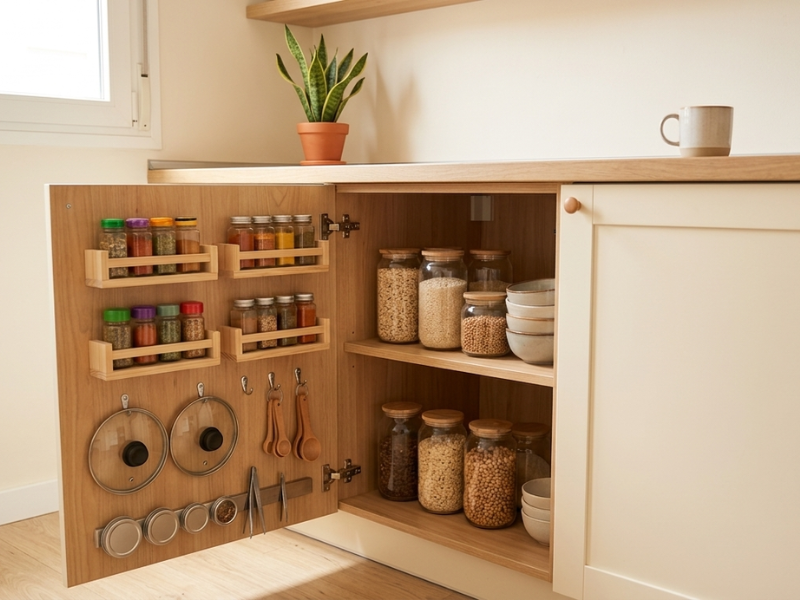
We often open a cabinet and see the mess inside, but have you ever looked at the inside face of the door? It’s incredibly valuable vertical space. With a few simple adhesive hooks (they cost pennies), you can hang your pot lids, which are always the hardest thing to organize.
If you love visual order as much as I do, add the small wooden spice racks that a certain Swedish furniture store sells for next to nothing. Screwed to the inside of your pantry door, they let you see every spice at a glance without taking up shelf depth. It’s a total transformation: suddenly the cabinet where nothing used to fit seems to have stretched.
Rolling carts: the mobile island of your dreams
If you don’t have room for an island or a permanent side table, a metal cart on wheels is your best ally. They’re affordable and you can move them wherever you need. Mine holds my entire beverage station: glass jars with different teas, the mugs I use most, and the honey.
When friends come over, the cart rolls into the living room. When I need room to cook, it tucks into a corner. It’s versatile, it has that industrial-cozy feel, and it uses height rather than width.
Magnetic storage: knives and jars in midair
Magnetic strips aren’t just for professional chef’s knives. I use them to hold small metal spice tins and even my bag clips. Mounting a magnetic strip under your upper cabinets clears the counter completely. You know my golden rule: clear counter, calm mind.
3. Expanding the bedroom
The bedroom in a small apartment has a particular challenge: it has to be a place of peace, yet it’s usually where we keep the bulkiest things, like clothes, sheets, and comforters. How do we manage that without it looking like a warehouse?
Under the bed: the great forgotten space
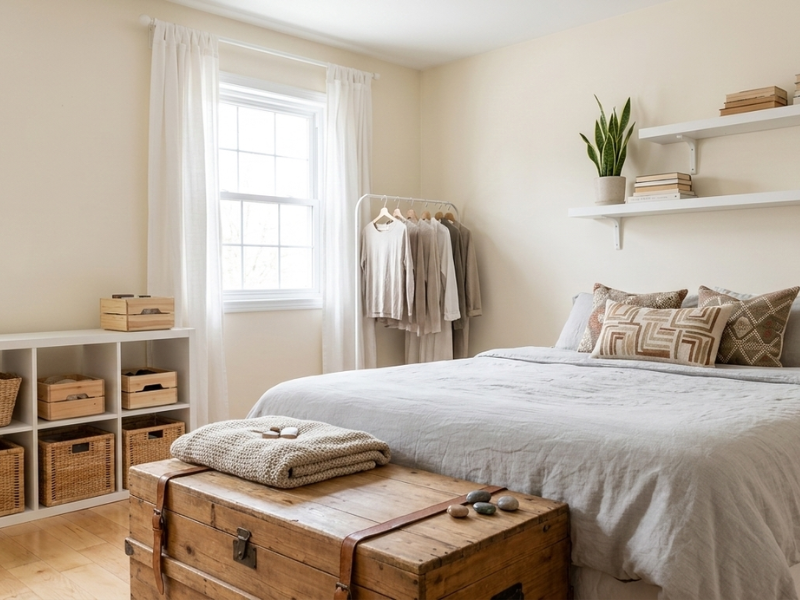
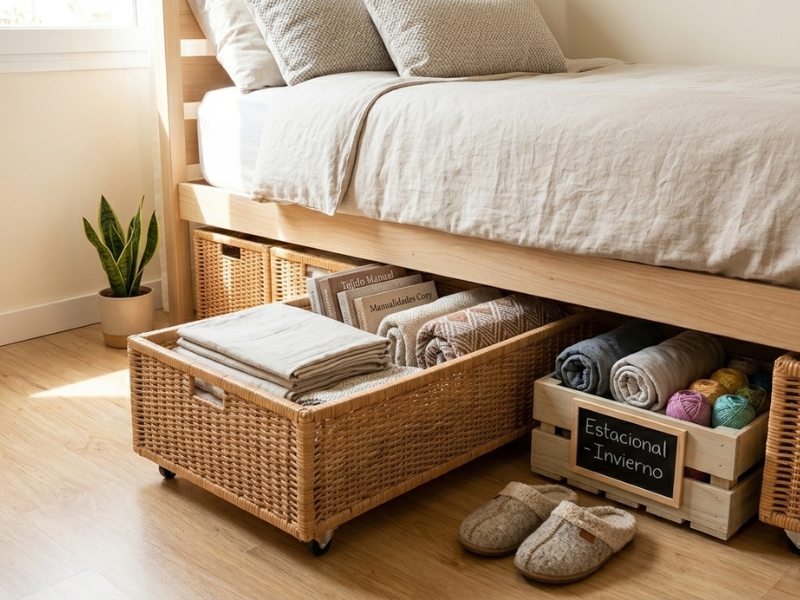
If you don’t have a storage bed, no problem! Beds on legs actually tend to feel visually lighter. The trick here is using low fabric or plastic bins on casters.
Here’s a low-cost tip, though: if you find plastic bins ugly, cover them with a scrap of linen or cotton left over from a sewing project. That way, if they peek out from under the bedspread, they look pretty and consistent with your style. This is where we keep what I call the seasonal stock: winter boots in summer, heavy blankets in spring. Anything you don’t need to reach daily should live down there.
Clothing racks: lightness vs. heavy wardrobes
A large built-in wardrobe sometimes swallows the whole room visually. A low-cost and very stylish alternative is an open clothing rack (mine is a small bamboo one). It forces you to keep your clothes tidy and curated (only what you actually wear), which supports that letting-go mindset we talked about earlier.
Add a pretty wooden shelf right above the rack and you create a beautiful little arrangement where you can set woven baskets for accessories. It’s a solution that costs a fraction of a wardrobe and makes the bedroom feel far airier.
Nightstands that pull double duty
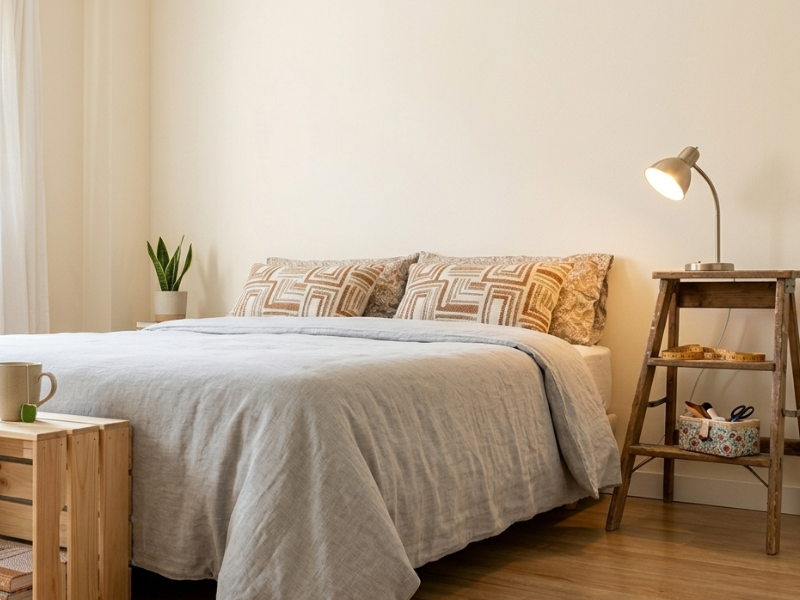
Forget solid nightstands that are just a block of wood. Look for options with shelves or, better still, use a small reclaimed wooden ladder. The rungs can hold your current books and a small lamp, and a basket underneath can take the pillows you pull off the bed at night. Reusing things you already own, or finds from a flea market, is the essence of low-cost storage with soul.
4. The bathroom: maximizing comfort in 20 square feet
If the kitchen was short on space, the bathroom in a small apartment is usually critical. This is where office and kitchen accessories turn magical.
Desk organizers in the bathroom
You know those clear acrylic organizers for pencils or paper? They’re perfect for makeup and brushes inside the vanity drawer. Being transparent, they don’t weigh on the eye and they let you find everything in seconds.
Hanging baskets in the shower
Instead of piling every shampoo bottle in the corners of the tub (where moisture always collects), use an extra shower rod and hang wire baskets from it with hooks. It’s a solution for under ten dollars that keeps everything dry, tidy, and out of your direct line of sight when you walk in.
5. The living room: the multifunction challenge with style
In a small apartment, the living room is movie theater, dining room, library, and sometimes even an improvised gym. The trick to keeping it from looking like a storage unit is choosing furniture that works double.
Sofas and ottomans with a secret
If you’re going to invest in something, make it a sofa with a storage compartment or ottomans that open up (they come in several colors, so nothing has to clash). If you already have yours and they have no storage, don’t worry. One masterful low-cost trick is using wooden crates (sanded and waxed) under the coffee table. Add small casters and you can pull them out to hold remotes, magazines, or the throw that always ends up crumpled in a corner. It’s a solution for under five dollars that adds gorgeous natural texture.
The retinol effect in decorating: wood vs. plastic
Here’s a comparison I love. Choosing storage materials is a little like choosing skincare. Plastic is the quick patch: cheap, functional, but it doesn’t age well, it scratches and loses its shine.
Natural wood or wicker storage, on the other hand, is the retinol of decorating. At first it may seem to demand more attention (picking the right piece, treating it), but its properties are transformative over the long run:
- Properties: wood breathes and brings organic warmth. Much like retinol renews skin cells, wood renews a room’s energy and makes it feel more alive.
- Comparison: where plastic shouts “cheap,” reclaimed wood says “soul.” Using natural fiber baskets for your yarn or blankets doesn’t just organize, it decorates on its own. It’s an active ingredient that improves your home’s texture as time goes on.
6. The creative corner: where order feeds inspiration
For those of us who love punch needle, crochet, or cross stitch, storage isn’t optional, it’s vital. When your materials are a tangle, creativity stalls.
Glass jars: transparency and beauty
Don’t throw out your canning jars. Wash them well, remove the labels with a little oil, and use them to organize buttons, beads, or needles. Being glass, you can see what’s inside (a real time saver), and they create an old apothecary look that’s perfect on open shelving. It’s the most low-cost storage in the world and the most photogenic.
Document files for fabric and patterns
If you have fabric scraps or cross stitch charts scattered everywhere, use cheap cardboard file boxes. Cover them with pretty paper or paint them with a little chalk paint and they turn into design pieces. Sorting them by color or theme will make you feel like you have your own professional studio in barely two feet of desk.
Frequently asked questions about low-cost storage in small apartments
How do I keep open storage from looking messy?
The secret is repetition. Use three identical baskets on one shelf and your eye reads them as a single decorative unit rather than three piles of stuff. Visual uniformity is the key to attractive order.
Is hidden storage better than open storage?
It depends on your personality. If you’re a visual person (as most creative people are), open storage in glass jars or on pegboards will help you find inspiration. If visual noise stresses you out, prioritize closed bins with pretty labels.
What do I do about cords in a small living room?
Take a nice shoebox, cut a few holes in the sides, and put the power strip inside. It’s a zero-cost solution that instantly cleans up the area around your TV or desk.
How can I make use of corners?
Corners are the great forgotten space. There are very inexpensive corner shelves that let you add a trailing plant or your craft books without taking any walkway space.
Can you really have a cozy home with cheap furniture?
Absolutely! Cozy doesn’t come from the price of the furniture, it comes from texture. A basic metal shelf turns warm the moment you add a woven basket, a trailing plant, and warm lighting.
Tell me your master trick!
I hope this guide gave you the little push you needed to look at your small apartment with fresh eyes. Remember that this isn’t about having more space, it’s about enjoying the space you already have. Every organized corner is a corner won back for your creativity.
What about you? Which storage trick saved your life at home? Are you more of a hidden-bins person, or do you like everything out in the open like I do? I’d love to read you in the comments so we can trade ideas. Let’s build a home together that inspires us every single day!