Wondering why your home doesn’t feel as cozy as you dream it could? Discover the differences between cozy, hygge, and cottagecore decorating. I’ll walk you through all of it with examples, tips, and my own experience so you can create the retreat you deserve
I picture you sitting there with a cup of tea, looking at your living room and wishing it felt cozier, with no idea where to start. That’s exactly why I’m writing this. I’ve been through the same thing a thousand times. A few years ago I renovated my place and tried everything. Cold minimalism that left me chilly, maximalism that overwhelmed me, and finally I landed on the perfect combination of cozy, hygge, and cottagecore.
Today I’m telling you everything, no filter. We’re going to break down each style, its origins, its real differences, how it feels day to day, and above all how you can use them so your house stops being just a place where you live and becomes the retreat you’ve always dreamed of. Get ready, because this is going to be long, deep, and full of details that will make you say this is exactly what you needed.
This post may contain affiliate links. If you buy through them, you’re supporting my work (at no extra cost to you).
Quick comparison: cozy vs. hygge vs. cottagecore
| Aspect | Cozy decorating | Hygge style | Cottagecore |
|---|---|---|---|
| Origin and philosophy | A modern, universal term built around warmth and sensory comfort. Adaptable to any culture or space. | A Danish philosophy of everyday well-being and simple pleasure. Focused on shared or solo moments. | A contemporary aesthetic inspired by English and French rural nostalgia. It idealizes country life like a storybook. |
| Level of minimalism | Flexible: it can be minimal or heavily layered depending on your taste. | More restrained and orderly, though full of soft textiles. It avoids excess. | Clearly maximalist. It loves accumulating details and objects with history. |
| Main colors | Warm, earthy neutrals: creamy beiges, soft terracottas, chocolate browns, muted mustards, sage greens, and touches of burnt orange. | Very soft, muted neutrals: off-whites, pearl grays, light beiges, taupes, washed moss greens, and soft blues that verge on gray. | Faded, romantic pastels: dusty pinks, sky blues, butter yellows, pale lavenders, sage and olive greens, terracottas. |
| Textures | Plush, soft layers: chunky wool, bouclé, velvet, heavy knits, high-pile rugs, woven baskets, and irregular ceramics. It feels puffy and comfortable. | Soft and natural but clean: fine merino or cashmere, rumpled linen, matte light wood, unglazed ceramics. It reads calm and high quality. | Romantic and handcrafted: rumpled linen, lace, embroidery, open knits, aged wood, quilts, wicker, and ruffled fabrics. It feels lived in and full of history. |
| Light | Warm and layered: floor and table lamps with fabric shades, warm LED strips, and lots of candles. It creates soft pools of light and cozy shadows. | The softest and most ambient: candles are essential, along with very warm indirect light (2700K or lower), opaque shades, and dimmers. It looks like a cave of amber light. | Romantic and filtered: linen curtains that let daylight through, lanterns, small string lights, vintage lamps, and candles in antique holders. |
| Emotional atmosphere | It hugs you tight and makes you feel safe and comforted. | It calms your mind and connects you to peace and well-being. | It makes you feel like you’re inside a nostalgic, dreamy fairy tale. |
| Everyday adaptability | Very easy in small city apartments. It doesn’t require major changes. | Works beautifully with daily rituals. Ideal for fall and winter. | Needs a bit more space for objects. Gorgeous with elements like patterned tile or terracotta. |
| Ideal combination | The main base for most homes. Easy to blend with the other two. | Adds rituals and candles as an accent. | Brings romantic, vintage details as a special touch. |
What does “cozy decorating” really mean, and why does it win you over?
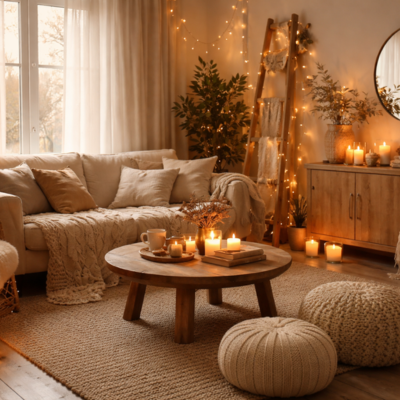
When I talk about cozy decorating, I’m not talking about a passing trend. Cozy is that feeling of I’m safe here, I can breathe deeply here. The word itself means comfortable, warm, intimate, and it perfectly describes the atmosphere that makes you kick off your shoes the second you walk in and flop onto the sofa without a second thought.
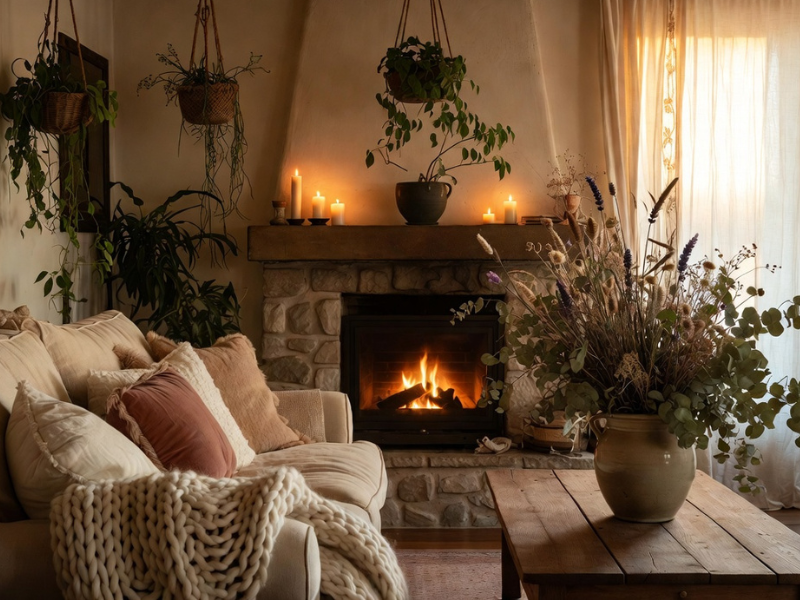
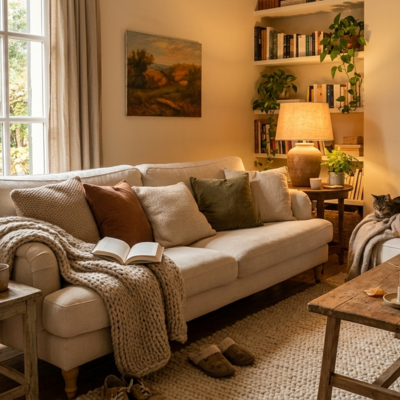
For me, cozy decorating rests on three pillars that never fail. Sensory warmth, layers of texture, and soft light. Picture a living room where the walls are a creamy beige that seems to embrace the afternoon light. There’s a thick wool rug underfoot, a sofa with pillows like clouds, and a chunky knit throw tossed aside as if someone just got up from a nap. The lamps have fabric shades, the light is always warm and never cold white, and candles are lit even in the daytime.
What I love most about cozy is how flexible it is. It doesn’t ask you to throw out everything you own. Take your same old Ikea sofa and, with just three bouclé pillows, a wicker floor lamp, and a vase of dried branches, you’ve already transformed it. It’s the perfect style for those of us in 750 square foot city apartments who want the place to feel like a mountain cabin without ever leaving town.
Here’s a secret I discovered by experimenting. Cozy works because it appeals to all five senses at once. The feel of wool, the smell of a vanilla candle, the soft sound of rain against the window or a lo-fi jazz playlist, the taste of tea, and the sight of it all working together. That’s why walking into a cozy home makes you feel like stress stayed outside.
In 2026, cozy has evolved. It’s no longer just throws and lights. Now we’re bringing in natural elements like reclaimed wood, exposed stone around electric fireplaces, and plenty of handmade ceramics from small studios. It’s a style that embraces imperfection. A mug with a gold kintsugi crack, a pillow slightly faded by the sun, all of it adds authenticity.
Hygge: the Danish art of feeling good at home, and why it changed my life
Now let’s talk about hygge, which is probably the grandfather of all of this. Pronounced roughly hoo-gah, it comes from Denmark and Norway and has roots going back to the 18th century, though it went global around 2016 with the books by Meik Wiking.
Hygge isn’t just decorating, it’s a philosophy of life. It’s about creating moments of everyday well-being with the people you love, or with yourself. In decorating, hygge shows up in very specific details. Lots of candles, since Danes burn more candles per capita than anyone in the world, soft lighting, low rounded furniture that invites you to sit, merino or cashmere throws, and a table always set with something good to share.
What sets hygge apart is its emphasis on community and simple pleasure. A hygge living room doesn’t have to be Instagram perfect. In fact, the more lived in, the better. Picture a coffee table with mug rings on it, an open book, homemade cookies, and your friends chatting while snow falls outside, or rain, which counts too.
I started practicing hygge when I lived alone in a dark studio. I bought five secondhand candlesticks, unscented candles so nothing would overwhelm the room, and I began lighting them every afternoon at 7 p.m. It changed everything. All at once, cooking for myself stopped being a chore and became a ritual. I’d put together a cheese board, put on soft music, and have dinner like I was in Copenhagen.
Key hygge features you can’t skip: light that’s always indirect and never a harsh overhead. Materials like light wood, wool, matte ceramics, blown glass. Colors in soft neutrals, pearl grays, sandy beiges, touches of moss green. Furniture that’s low, plush, and made for curling up.
Here’s the loveliest part. Hygge doesn’t cost a fortune. It’s more an attitude than a shopping list. You can have a rental full of cheap furniture and still create hygge with good textiles and candles.
Cottagecore: the romantic country dream that snuck into the city
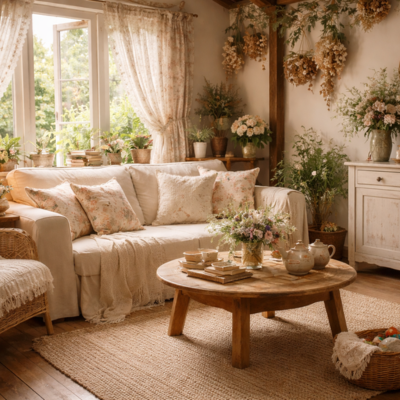
Now let’s switch gears and talk about cottagecore, the most storytelling-driven of the three. It emerged on Tumblr around 2014 but exploded on TikTok and Instagram during the pandemic. It’s an aesthetic that idealizes 19th century English and French country life, filtered through a modern, accessible lens.
Cottagecore is romantic, nostalgic, and a little fanciful. Think stone cottages covered in ivy, gardens full of wildflowers, ruffled aprons, old books, and floral china teacups. In decorating, that translates to vintage furniture or furniture that looks vintage, plenty of dark wood or wood painted in faded pastels, wallpaper with small floral motifs, lace, embroidery, and objects that tell stories. An antique watering can as a vase, a wicker basket full of blankets, a bunch of dried lavender hanging from the ceiling.
What fascinates me most about cottagecore is how it connects with our wilder, more creative side. It isn’t just decorating, it’s imagining you live in a storybook. Plenty of us who work in offices have built cottagecore corners on our balconies or patios. Pots of herbs, a wicker rocking chair, an antique lantern, and suddenly breakfast out there feels like the French countryside.
Typical colors: dusty pinks, sage greens, butter yellows, faded blues, creams, and earthy browns.
Textures: rumpled linen, cotton with lace, open knits, aged wood.
The key difference from the other two: cottagecore is far more maximalist in its details. It isn’t afraid to accumulate. A shelf packed with vintage teacups, stacked books, porcelain figurines, and trailing plants is pure cottagecore.
The 8 key differences nobody tells you about that change everything
Now that we know each style on its own, let’s get to what really matters: the actual differences.
If there’s one thing I’ve learned after trying all three styles in my own home, it’s that colors, textures, and light aren’t details. They’re the heart of the feeling. Change just one and the whole atmosphere shifts.
1. Origin and philosophy
Cozy is a universal, modern term that adapts to any culture. Hygge is Danish and carries a strong social and emotional well-being component. Cottagecore is a contemporary aesthetic movement inspired by rural nostalgia.
2. Minimalism vs. maximalism
Cozy can be minimal or layered. Hygge tends to be more restrained and orderly while still full of textiles. Cottagecore is clearly maximalist. More objects, more details, more life.
3. Use of color
Cozy: warm earthy neutrals with touches of terracotta or mustard.
Hygge: soft grays, beiges, off-whites, very muted greens.
Cottagecore: faded pastels, florals, soft pinks, blues, and yellows.
4. Lighting
All three use warm light, but hygge is the king of candles. Cozy prefers floor and table lamps. Cottagecore brings in natural light and lanterns.
5. Connection with nature
Cozy includes it subtly with plants and dried branches. Hygge uses it to set a mood with fresh flowers in winter. Cottagecore celebrates it romantically with dried flowers, herbs, and gardens.
6. Furniture
Cozy: a mix of modern and comfortable vintage. Hygge: low, plush, functional pieces. Cottagecore: vintage, restored, full of history.
7. Emotional atmosphere
Cozy makes you feel held and safe.
Hygge makes you feel at peace and connected.
Cottagecore makes you feel like you’re inside a fairy tale.
8. Adaptability to real life
Cozy is the easiest to pull off in a small apartment. Hygge requires discipline with rituals. Cottagecore needs room for objects and can overwhelm a space if you don’t keep it in check.
Color, texture, and light: the soul of each style
Colors in cozy decorating
The colors in cozy decorating are the most versatile and welcoming of the three. They’re warm neutrals that convey safety and depth effortlessly. Think creamy beiges, soft terracottas, milk chocolate browns, muted mustards, sage greens, and touches of burnt orange. Nothing is cold or jarring. Everything has a warm undertone that makes the room feel like it’s wrapping around you.
In 2026, cozy has taken on more terracotta and deep earth tones, always balanced with creams and beiges so it never feels heavy. For example, walls in a sandy beige like a warm greige, a sofa in sand-colored linen, and pillows in terracotta and mustard. The result is a stable, grown-up, comforting space, perfect for rainy days when you want the outside world to stay outside.
The beauty of cozy is that it tolerates small, more intense accents, like a rust red vase or a burgundy throw, without losing its harmony.
Colors in hygge style
Hygge colors are calmer and more minimal in their palette. They lean toward very soft, muted neutrals. Off-whites, pearl grays, light beiges with a pink undertone, taupes, heavily diluted moss greens, and soft blues that verge on gray. Everything looks faded by time, or as though it’s bathed in northern European light.
You won’t see saturated colors. Hygge is after mental quiet, so it avoids strong contrast. A wall in fog mist, a gray-beige haze, with light wood furniture and textiles in cream and pale gray, creates that Danish peace that makes you want to sit for hours doing nothing. It works especially well in rooms with little natural light, because these colors gently reflect what little there is without absorbing the warmth.
Hygge allows a very subtle accent here and there, like a pale sage green or a dusty blue, always in small doses. It’s the perfect palette if you’re after emotional calm rather than romantic drama.
Colors in cottagecore
Cottagecore colors move into more romantic, narrative territory. Cottagecore loves faded pastels and earth tones with history. Dusty rose, soft sky blues, butter yellows, pale lavenders, sage and olive greens, terracottas and earthy browns. Everything looks pulled from an old garden or a painting of the English countryside.
Unlike cozy, which is earthier and deeper, and hygge, which is more neutral and gray, cottagecore has that nostalgic sweetness. Picture cream walls with a discreet floral wallpaper in pink and green, furniture painted off-white or faded blue, and details in pale yellow. It’s a palette that tells stories. It looks like the sun has faded the colors slightly over the years.
It looks gorgeous combined with patterned encaustic tile or terracotta floors, because it connects with old farmhouse tradition. You can be bolder here with flowers and prints than in the other two styles.
Textures in each style
Texture is what takes a style from pretty to I want to live here forever. In cozy it’s layers upon layers. It’s the king of soft, plush textures. Chunky wool, bouclé (that fabric with little loops that looks like a cloud), soft velvet, heavy knits, high-pile or natural sisal rugs, pillows in different sizes and materials. Everything invites you to sink in. Wood appears in medium or dark tones, often with a matte or slightly aged finish. Handmade ceramics with irregular texture and woven baskets show up too. Cozy feels puffy and comfortable, like everything is ready for a long nap.
In hygge, textures are clean yet extremely soft and natural. Light merino or cashmere that’s warm without bulk, rumpled linen with no ironing (the wrinkles are part of the charm), light wood that’s smooth to the touch like birch or pine, matte unglazed ceramics, sheepskin or soft imitations. It avoids anything excessively furry or bulky. It prefers textures that read as quality and simplicity. A fine wool blanket folded carefully, a bouclé sofa that isn’t too chunky. Everything conveys tactile calm and serene order.
In cottagecore, the texture mix is romantic and rustic. Rumpled linen, yes, but also lace, embroidery, floral cottons, open knits, aged or distressed painted wood, wicker, rattan, ceramics with floral relief, patchwork quilts, fabrics with subtle ruffles. Here you can have more textural noise. A crochet blanket over a velvet sofa, pillows with fringe, baskets full of dried flowers. It looks handmade, lived in, as if every object has a story.
Light in each style
Light is where the emotional difference shows most. In cozy it’s warm and layered. Never a harsh overhead light. Floor lamps with fabric shades, table lamps, hidden warm LED strips, plenty of candles, and not only heavily scented ones. The light creates soft shadows and pools of warmth. In winter, the goal is for it to feel like there’s a fireplace, even an electric one. Cozy loves golden sunset light and recreates it artificially.
In hygge it’s the softest and most ambient of all. Candles are essential. Very warm light at 2700K or lower, always indirect. Paper lanterns, opaque shades, dimmers everywhere. It avoids white or cool light. The goal is creating a cave of light where you feel protected. In the evening, a hygge room looks wrapped in a blanket of soft amber light. It’s meditative.
In cottagecore it’s romantic and natural whenever possible. Windows with light linen curtains that filter the light into soft patterns. Lanterns, small fairy lights, vintage table lamps with glass or fabric shades, candles in antique holders. It welcomes a bit more bright daylight in the morning, but come evening it chases that golden romantic glow. The shadows of plants and dried flowers on the walls are part of the charm.
The magic happens when you combine these three elements well. In my living room, for instance, I have cozy walls in warm beige and a sofa full of plush textures, then I add hygge light with lots of candles and a cottagecore touch with a crochet blanket and a vase of dried flowers. The result is one of a kind and feels 100 percent mine. You notice how each one appeals to a different emotion. Cozy hugs you tight, hygge quiets your mind, and cottagecore makes you dream.
How to combine all three without it looking like a jumble
Here’s the part that excites me most. You don’t have to pick just one. For me, 40 percent cozy, 35 percent hygge, and 25 percent cottagecore is the winning combination.
In the living room, an enormous cozy sofa with wool throws, a coffee table made from a restored antique barn door (cottagecore), and candles always lit at sunset (hygge). Beige cozy walls, with discreet floral wallpaper on one wall for cottagecore.
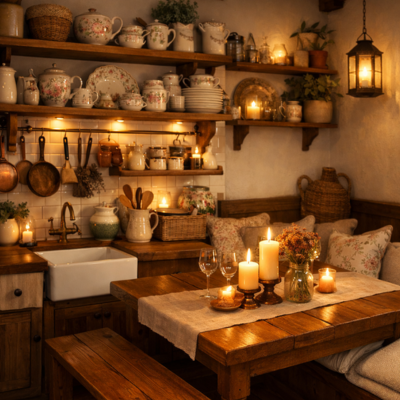
In the kitchen you can combine open shelving with vintage dishware (cottagecore), warm under-cabinet lighting (cozy), and a wooden table with a bench where you always eat by candlelight (hygge).
The trick is choosing one style as your base and letting the other two be the accents.
Room by room: how to apply it in your actual home
The living room
A cozy base with a big sofa and a rug. Add hygge with a tray always set with mugs and cookies. A cottagecore touch with a large bunch of dried flowers and a vintage reading chair.
The bedroom
A bed with a down comforter and lots of pillows for cozy. Rumpled linen sheets for hygge. A painted wooden headboard with flowers for cottagecore.
The kitchen
Light wood and a marble counter for cozy. Displayed dishware and aprons on hooks for cottagecore. Candles on the table and a handwritten weekly meal plan for hygge.
The bathroom
Thick towels and a cotton bath mat for cozy. Handmade soaps and candles for hygge. A wicker basket with bath salts and dried flowers for cottagecore.
How I went from a gray apartment to a dream retreat
Let me tell you quickly about my transformation, because I know it’ll help. Three years ago my apartment looked like a furniture catalog in full neutral mode. I’d walk in and feel nothing. I started with cozy. I bought a throw for about 25 dollars and noticed a difference right away.
Then I discovered hygge in a book and started my candle rituals.
Finally, during a summer in the countryside, I fell in love with cottagecore and came home with an armful of vintage finds.
My home isn’t perfect today, but it’s mine. When someone walks in they say wow, it feels so good in here. That’s what I want for you.
Frequently asked questions about cozy, hygge, and cottagecore decorating
Can I mix all three styles in a rental?
Absolutely. Use textiles, lamps, and portable objects. No construction required.
Is cottagecore expensive?
Not necessarily. Flea markets, online marketplaces, and thrift stores are your best friends.
Does hygge only work in cold climates?
Not at all. It works beautifully in fall and winter, and in summer with fans and lightweight fabrics.
Which one is easiest for beginners?
Cozy, without a doubt. It’s the most intuitive and has the fewest rules.
Can I have plants in all three styles?
Of course. Cozy prefers large, structural plants. Hygge favors fresh flowers. Cottagecore loves trailing plants and herbs.
So what now? Your turn to create your retreat
After all of this, all I want is for you to get up, look at your home with fresh eyes, and make one small change today. It could be lighting a candle, buying a throw, or simply moving the sofa so it catches better light.
Tell me in the comments which of the three styles you identify with most. Cozy, hygge, or cottagecore. Or maybe you already have your own blend. I’d love to read your stories and help if you want. Share a photo of your favorite corner, or tell me what you’re changing this weekend.
Your home already has the potential to be the most beautiful place in the world. All it takes is for you to decide it deserves that.
A huge squeeze of a hug from your friend, who is already lighting the candles for you.